
Massage Gun Buying Guide for Forearm Recovery and Hand-Intensive Work
Repetitive daily tasks take a toll on your hands and forearms. Whether you are gripping a pickleball paddle, typing at a workstation, or lifting boxes, these muscle groups rarely have a chance to fully decompress. Finding the right massage gun for forearm recovery means looking past raw power and prioritizing precision, adjustable speeds, and attachment variety.
Who Actually Needs a Forearm Massage Gun?
If you spend your days doing hand-intensive work—anything from manual labor to dental hygiene or competitive racket sports—you know the heavy, dull ache that sets in by the end of a shift. Targeted percussion massage drives blood flow into deep tissue, clearing out metabolic waste. However, hand-intensive work recovery requires a fundamentally different approach than treating large muscle groups.
Forearms are packed with narrow muscles, tendons, and nerves sitting right near the surface. A heavy-duty recovery device built for glutes or quadriceps will often bypass the tissue entirely, transferring uncomfortable shockwaves straight into the bone.
Why Control and Attachment Choice Matter
The biggest mistake buyers make is assuming that deeper penetration equals better recovery. For forearms, too much force causes muscles to contract defensively, defeating the purpose of the treatment. You need a device that offers a wide speed range, starting from a very gentle setting.
The attachment head dictates how force is distributed. You should always look for a small muscle massage attachment—typically a bullet, wedge, or pinpoint head. Here is how different shapes interact with forearm anatomy:
- Bullet or cone heads: Ideal for driving targeted percussion massage into specific trigger points along the forearm without hitting surrounding tissue.
- Wedge heads: Useful for scraping motions along the length of the forearm to help with fascial release.
- Flat or round heads: Better for general warm-up routines, but often too wide for the narrow gaps between forearm muscles.
Using a large foam head on a forearm is like trying to write with a thick marker when you need a fine-tip pen. You cannot access the tight, localized knots that cause persistent pain.
Evaluating Adjustable Settings for Hand-Intensive Work Recovery
When comparing a forearm massage gun to a standard recovery device, the control panel is your primary decision point. Buyers frequently waste money on high-end models that only operate at high strokes-per-minute (SPM) levels. A device that starts at 2,000 SPM is already too aggressive for wrist and forearm tendons.
Look for models that feature clearly marked, incremental speed settings. You want the ability to start at a low frequency to warm up the tissue, and gradually increase the speed only if the muscle tolerates it. A simple high-low toggle is not sufficient.
Grip Design for One-Handed Use
Treating your own forearm requires a specific ergonomic setup. Because you are holding the device with one hand and applying it to the arm on the same side of your body, the angle of the handle dictates how much wrist strain you experience.
Mistakes happen when buyers choose a heavy, straight-handled device intended for therapists to use on large muscle groups. Holding a heavy device at odd angles for ten minutes will leave your wrist more fatigued than before you started. Look for an angled handle or a multi-grip design that allows your wrist to remain in a neutral position while you navigate the contours of your forearm.
Comparing Material Durability Across Equipment
Portability and durability matter significantly for workers who need to treat their forearms on breaks or immediately after a shift. Understanding how materials dictate longevity is a universal buying principle across industries, as shown in the sporting goods and travel gear markets.
| Brand & Model | Category | Key Material / Spec | Price |
|---|---|---|---|
| PRO-SPIN Carbon Fiber Pickleball Paddles Set of 2 | Sporting Goods | Lightweight, durable graphite | $79.99 |
| JOOLA Perseus 16mm Carbon Fiber Pickleball Paddle | Sporting Goods | 16mm Carbon Fiber surface | $199.95 |
| Sucipi Pickleball Bag for Women | Sporting Goods | Tear-resistant, water-resistant construction | $32.99 |
| Samsonite Freeform Hardside Carry-On Luggage | Travel Gear | Hardside spinner design | Not listed |
Just as competitive players rely on the durable honeycomb core found in the Paddletek Bantam EX-L Pickleball Paddle ($99.99) to withstand repeated impact, you need a recovery tool built with high-grade internal components that will not degrade after months of daily use. Similarly, just as the tear-resistant, water-resistant exterior of the Sucipi Pickleball Bag ($32.99) protects gear in harsh conditions, a high-quality recovery device needs a resilient exterior casing if it lives in a gym bag or locker.
Practical Safety Considerations for Forearm Use
The forearm houses delicate structures. The ulnar nerve runs right along the pinky-finger side of your wrist, and applying heavy percussion directly over it causes sharp, electric tingling in your hand. If you feel numbness or tingling in your fingers during a session, stop immediately and move the device higher up on the muscle belly.
Keep the moving head away from bones entirely. Gliding over the radius or ulna does nothing for muscle recovery and simply creates bone bruising over time. Keep the device moving slowly and continuously rather than resting in one static spot, which can over-stimulate a small area.
Actionable Takeaways for Your Purchase
- Verify the low-end speed: Ensure the device offers a genuinely gentle starting setting. High speeds are counterproductive for forearm flexors.
- Check the attachments: Do not buy a device unless it includes a pinpoint or bullet-style small muscle massage attachment for targeted work.
- Test the grip weight: Hold the device in one hand and reach across your body. If your wrist feels strained just holding it, look for an angled or lighter model.
- Avoid bone and nerve clusters: Map out your forearm treatment to focus strictly on the thickest part of the muscle, avoiding the wrist joint and elbow tendons.
Related Resources
Related Products
 USD 97.49
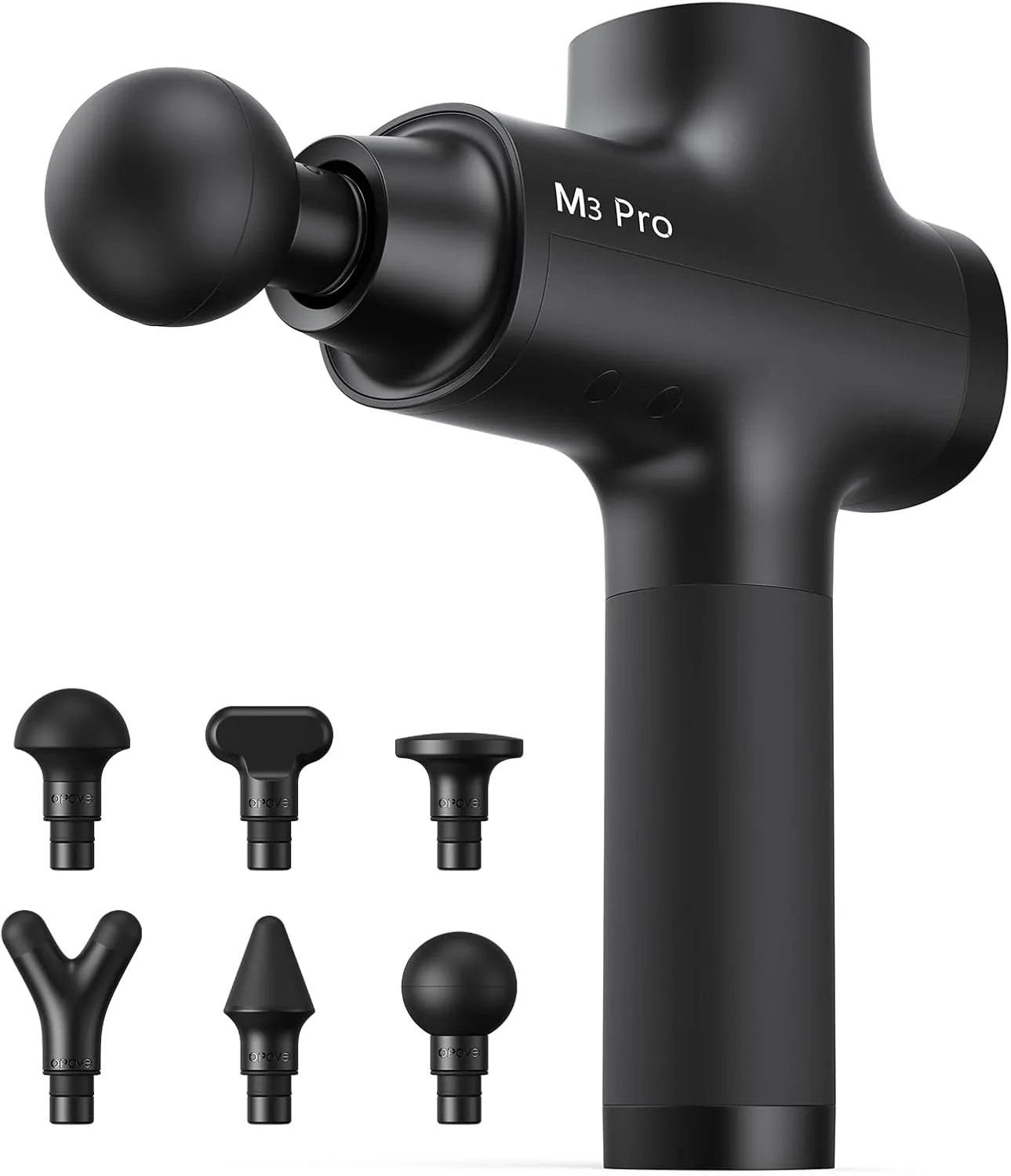
Opove M3 Pro 2 Massage Gun Deep Tissue Percussion Muscle Massager for Workout, Handheld Percussive Therapy Fascia Gun for Athletes Fast Recovery 4-8 Hours Long Battery Life, Powerful, Quiet, Black
You Get What You Pay For - We work out daily and invest a lot of time and effort into our…
View Details![Sharper Image PowerBoost Max Massage Gun [2026 Version] Anti-Stall Deep Tissue Percussion Massager| 7 Speeds| Workout Muscle Recovery| Pain Relief| Back & Shoulder Massage Tool| Gifts for Men Women](/media/products/sharper_image_powerboost_max_1.webp) USD 119.99
USD 119.99
Sharper Image PowerBoost Max Massage Gun [2026 Version] Anti-Stall Deep Tissue Percussion Massager| 7 Speeds| Workout Muscle Recovery| Pain Relief| Back & Shoulder Massage Tool| Gifts for Men Women
FROM THE #1 MASSAGE BRAND IN AMERICA: Deep tissue percussion built for real recovery, not…
View Details
USD 134.25
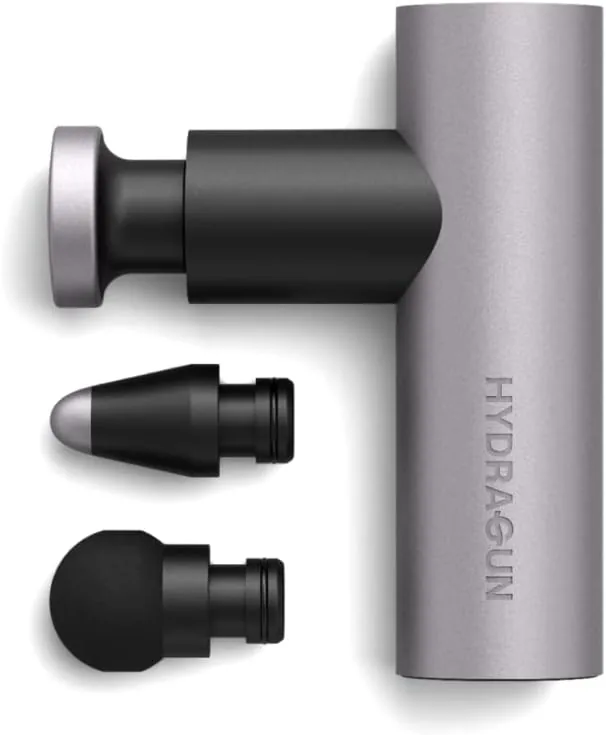
HYDRAGUN Atom Mini Massage Gun for Athletes, Portable Massage Gun, Deep Tissue Percussion Muscle Massager, Portable Massage Gun, Small & Quietest Massage Gun with Carrying Case & 3 Attachment Heads
POST-WORKOUT SORENESS - Recover from sore muscles after a workout The Atom mini massage g…
View Details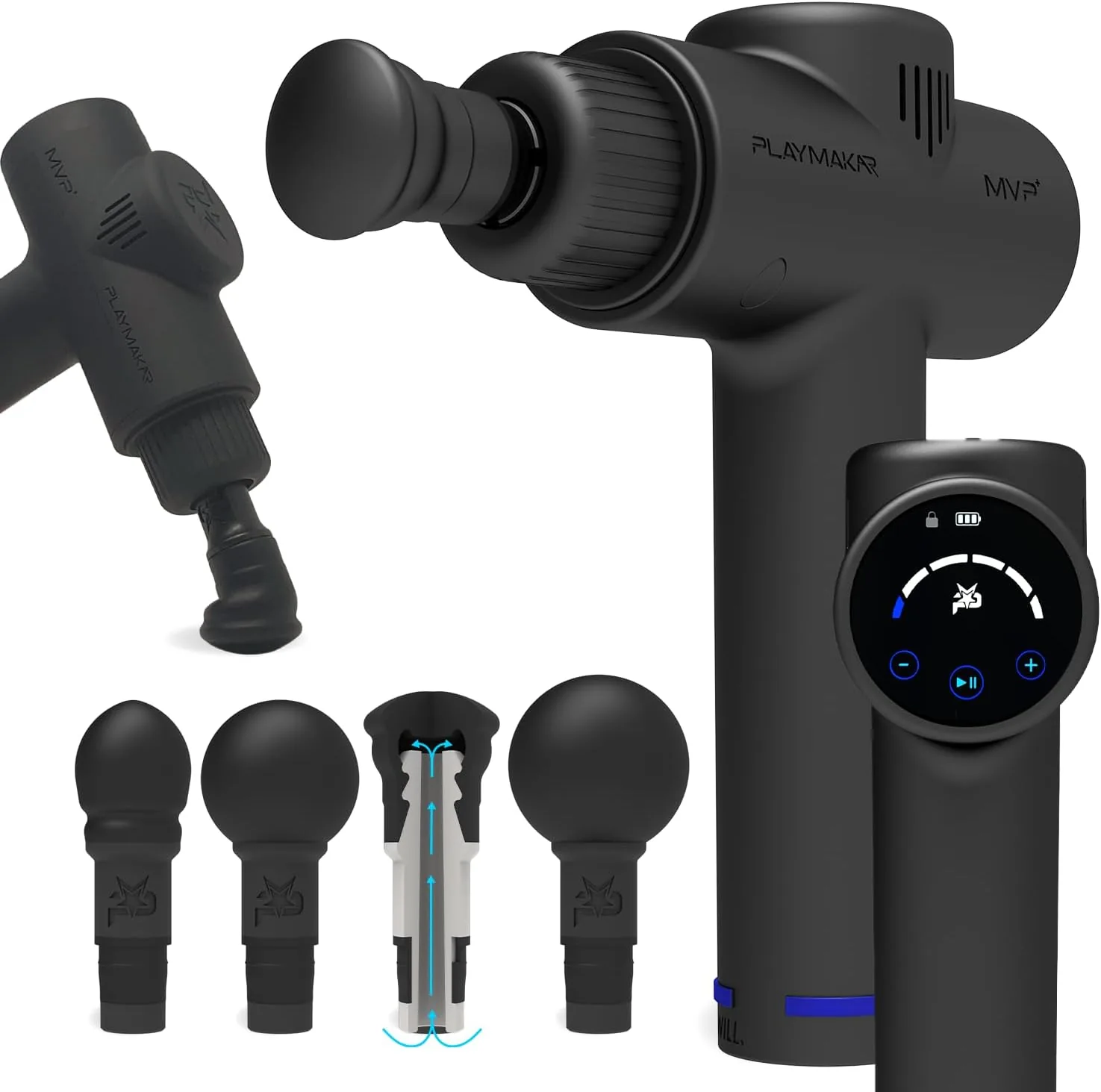 USD 149.25
MVP+ Percussion Massage Gun Kit, Personal Massager Tool, Body Massagers for Muscles, Hand Held Massager, 14 mm Deep Tissue Massage Tools, Muscle Gun (Black Gun Massager + 4 Tips)
BODY CONTOURING MASSAGE HEADS: Our patent pending pro tips offer low- to high-impact ther…
View DetailsRelated Articles
- Desktop Charging Station Buying Guide for Accessible Front-Port Charging
- Massage Gun Buying Guide for Shoulder and Upper Back Reach
- Massage Gun Buying Guide for Calves and Feet
- Ekrin Athletics Bantam Mini Buying Guide for Compact Deep-Tissue Care
- Massage Gun Buying Guide for Pre-Workout Muscle Activation
- Portable Massage Gun Buying Guide for Travel, Work, and Gym Bags