
Massage Gun Buying Guide for Pre-Workout Muscle Activation
![Sharper Image PowerBoost Max Massage Gun [2026 Version] Anti-Stall Deep Tissue Percussion Massager| 7 Speeds| Workout Muscle Recovery| Pain Relief| Back & Shoulder Massage Tool| Gifts for Men Women](/media/products/sharper_image_powerboost_max_1.webp "Massage Gun Buying Guide for Pre-Workout Muscle Activation")
A massage gun for pre-workout muscle activation works best as a short, targeted primer — 30 to 90 seconds per muscle group at moderate speed — not as a deep-tissue session squeezed in before a lift. Used that way, percussion massage can help raise local blood flow and prep stiff tissue for movement. That's exactly why more gym-goers now pack one alongside their lifting shoes.
This guide covers what actually matters when buying a percussion device for warm-up use: which features support brief, controlled sessions, where adjustable intensity fits in, and how to separate worthwhile devices from overpowered ones. Throughout, we reference real products from our deep-tissue massage gun catalog, which spans $25.99 to $599.00 USD and includes APHERMA, Hyperice, Ekrin Athletics, LifePro, BOB AND BRAD, HYDRAGUN, Achedaway, FITINDEX, Mebak, Medcursor, Opove, and PlayMakar.
When a Massage Gun Fits Into a Pre-Workout Routine
Not every warm-up needs percussion. Waking up stiff, rested muscles on a cold morning? A quick pass with a massage gun can shortcut the loosening-up phase. Already warm after a commute and some light cardio? You may barely need it.
The pattern most lifters and coaches settle on looks like this:
- Five to ten minutes of general movement to raise body temperature first.
- Short percussion passes — roughly 30–90 seconds — over the muscles you're about to load heavily: hips, glutes, lats, shoulders, or calves, depending on the session.
- Dynamic movement immediately after, while the tissue is warm and receptive.
- Save long, slow, high-pressure work for post-training recovery.
The key distinction is intent. Pre-workout, you're priming tissue, not remodeling it — and that changes what you should buy.
Buying Features That Support Short, Controlled Sessions
A device built for pre-workout muscle activation doesn't need the highest stall force on the market. It needs control. Three features matter most:
- Multiple speed settings. Warm-up work lives in the low-to-mid range of massage gun speed settings. A device with several distinct levels lets you start gentle and nudge up as tissue responds, instead of jumping from "off" to "jackhammer."
- A timer or auto-shutoff. Short sessions are the goal, and a built-in cutoff keeps you honest. If the device only runs in continuous mode, a phone timer works — but the built-in version is more convenient.
- A comfortable one-handed grip. You'll be reaching your own lats, hamstrings, and shoulders. An awkward handle turns a 60-second pass into a wrestling match.
Amplitude and stall force still matter, but for warm-ups they're secondary. You're not trying to overpower a knot; you're preparing tissue to move.
Why Adjustable Intensity Matters for Warm-Up Use
This is where budget devices most often fall short. A cheap single-speed gun forces a choice between too little and too much — and "too much" before a heavy squat session is worse than useless. Aggressive percussion on cold muscle can leave it feeling bruised and dull rather than primed.
Look for at least three to five usable speed settings, with a genuinely low first gear. If you plan to use the same device for post-workout recovery — a reasonable goal, since a gym warm-up recovery tool that pulls double duty spreads the cost — a wider top end is worth paying for. If it's strictly a pre-lift primer, mid-range devices do the job fine.
Attachments for Larger Muscles and Targeted Areas
Attachment heads determine how the device's energy lands. For a muscle activation routine, the useful set is small:
- A large flat or ball head for big surface areas — quads, glutes, hamstrings, lats. This is your default warm-up head.
- A bullet or wedge head for spot work between the shoulder blades, along the calf, or near (never on) the hip capsule.
- A soft cushioned head if you'll use the device on sensitive areas or post-session.
Most quality devices ship with four to six heads. More isn't better — three well-designed heads beat eight flimsy ones. Check that replacements are available before committing to a brand ecosystem.
Portability and Charging for Gym-Day Convenience
A warm-up tool that lives in a drawer at home doesn't get used at the gym. Weight, case quality, and battery reality all decide whether the device makes it into your bag.
Weigh the trade-offs honestly:
- Weight vs. power. Higher-force devices tend to be heavier. If you walk or commute to the gym, a lighter mid-range unit wins.
- Battery vs. session length. Pre-workout use drains the battery slowly — short bursts, low speeds. Even a modest battery handles weeks of warm-ups on a single charge, though heavy recovery use changes the math.
- Case and accessories. A zip case that holds the heads and charger keeps your bag organized. It sounds minor until you're digging for the bullet head under a bench.
Comparing Options: What to Buy at Each Budget
Within our catalog's $25.99–$599.00 range, value concentrates in the middle. Here's how the main options stack up for warm-up-focused buyers:
| Option | Approx. positioning | Best for | Trade-off |
|---|---|---|---|
| APHERMA Massage Gun | Entry-level percussion device in our catalog | First-time buyers testing a muscle activation routine on a budget | Basic feature set; fine for short warm-up passes, less ideal for heavy recovery work |
| LifePro / FITINDEX / Mebak models | Mid-range, feature-focused brands we carry | Regular gym-goers wanting multiple speeds and attachments without a premium price | Build quality and motor refinement step up from entry level, but warranty and support vary by model |
| Ekrin Athletics / HYDRAGUN / Achedaway | Upper-mid-range performance brands in our catalog | Serious lifters who want precise speed control and quiet operation for daily use | Higher price; more capability than a warm-up-only buyer strictly needs |
| Hyperice | Premium tier of our catalog | Buyers who want a top-of-range device for both warm-up and deep recovery | Approaching the top of the $599 price band; overkill if percussion is purely a pre-lift tool |
Our recommendation by situation: if you're new to percussion massage warm-up routines, start with the APHERMA massage gun or a comparable LifePro model — if the habit sticks, upgrade later. If you already know you'll use it daily for both warm-ups and recovery, an Ekrin Athletics or HYDRAGUN device is the sweet spot. Hyperice makes sense when budget is secondary to owning the strongest overall device.
Safe-Use Considerations Before Adding Percussion to a Warm-Up
Percussion is generally safe for healthy muscle tissue, but a few rules are non-negotiable:
- Stay on muscle. Never run the device over bone, joints, the spine, the front and sides of the neck, or the groin.
- Keep it moving. Don't park the head in one spot; glide slowly over the belly of the muscle.
- Skip injuries. Strains, bruises, recent surgery, varicose veins, and areas with numbness are off-limits — see a clinician first.
- Less is more pre-lift. If a muscle feels heavy or dull after your pass, you went too long or too hard. Cut the duration next session.
Your Pre-Purchase Checklist
- At least 3–5 distinct speed settings, with a genuinely gentle low end
- Flat or ball head for large muscles, plus a bullet head for spot work
- Weight you'll actually carry to the gym, with a case that holds the heads
- Battery life rated well beyond your weekly warm-up minutes
- Clear warranty terms and available replacement heads before you buy
Match the device to the job. For a pre-workout tool, control and convenience beat raw power every time — and that logic usually saves you money, too.
Related Products
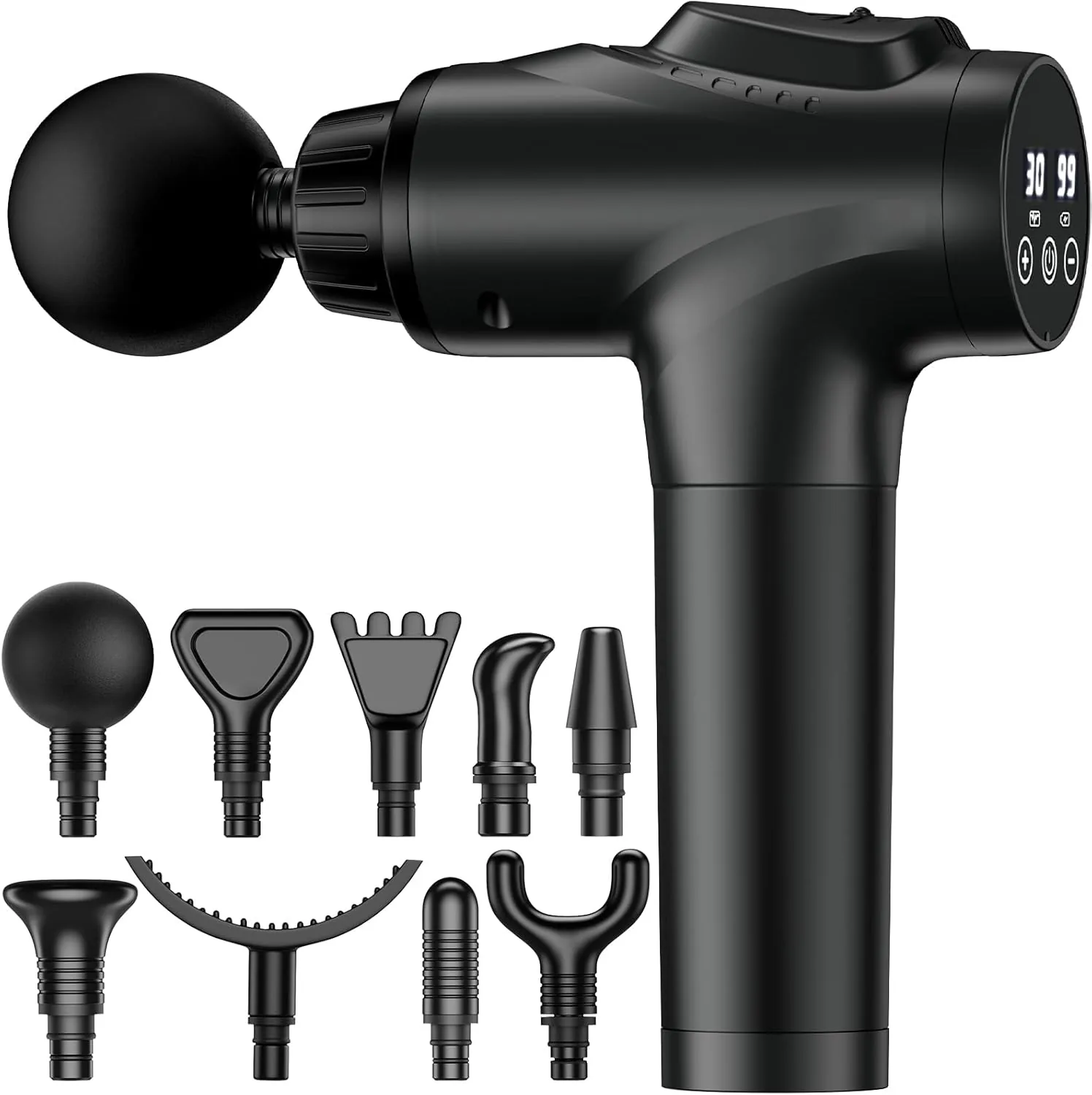 USD 19.49
APHERMA Massage Gun, Muscle Massage Gun for Athletes Handheld Electric Deep Tissue Back Massager, Percussion Massage Device for Pain Relief with 30 Speed Levels 9 Heads Black
Beat soreness, back pain, and stress: For those who don't want muscle soreness to slow th…
View Details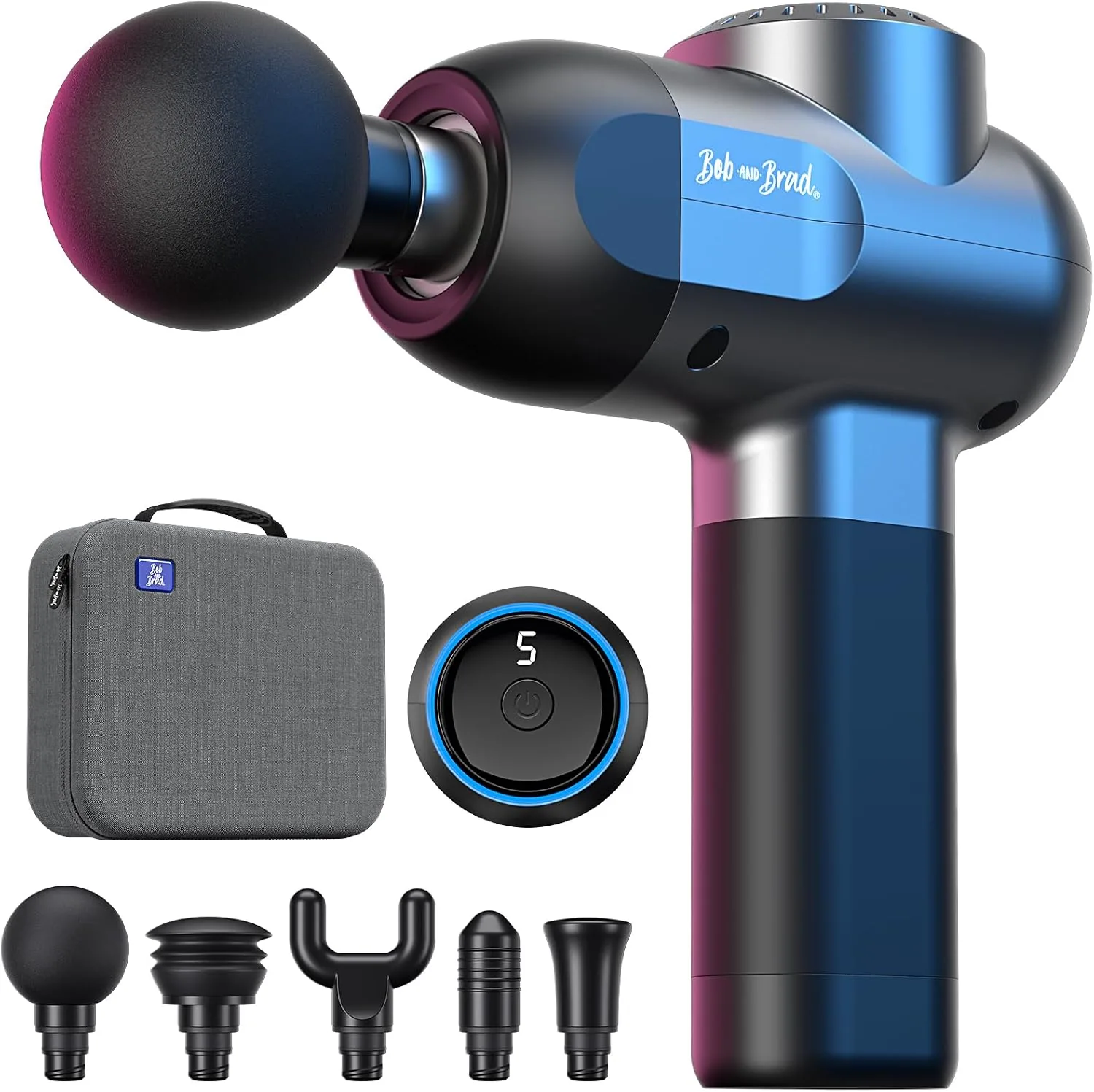 USD 52.46
BOB AND BRAD C2 Massage Gun, FSA Eligible & HSA Approved Deep Tissue Percussion Massager Gun, Muscle Massager with 5 Speeds and 5 Heads, Electric Back Massagers for Professional Athletes Home Gym
Designed by renowned physical therapists Bob and Brad, the C2 massage gun offers professi…
View Details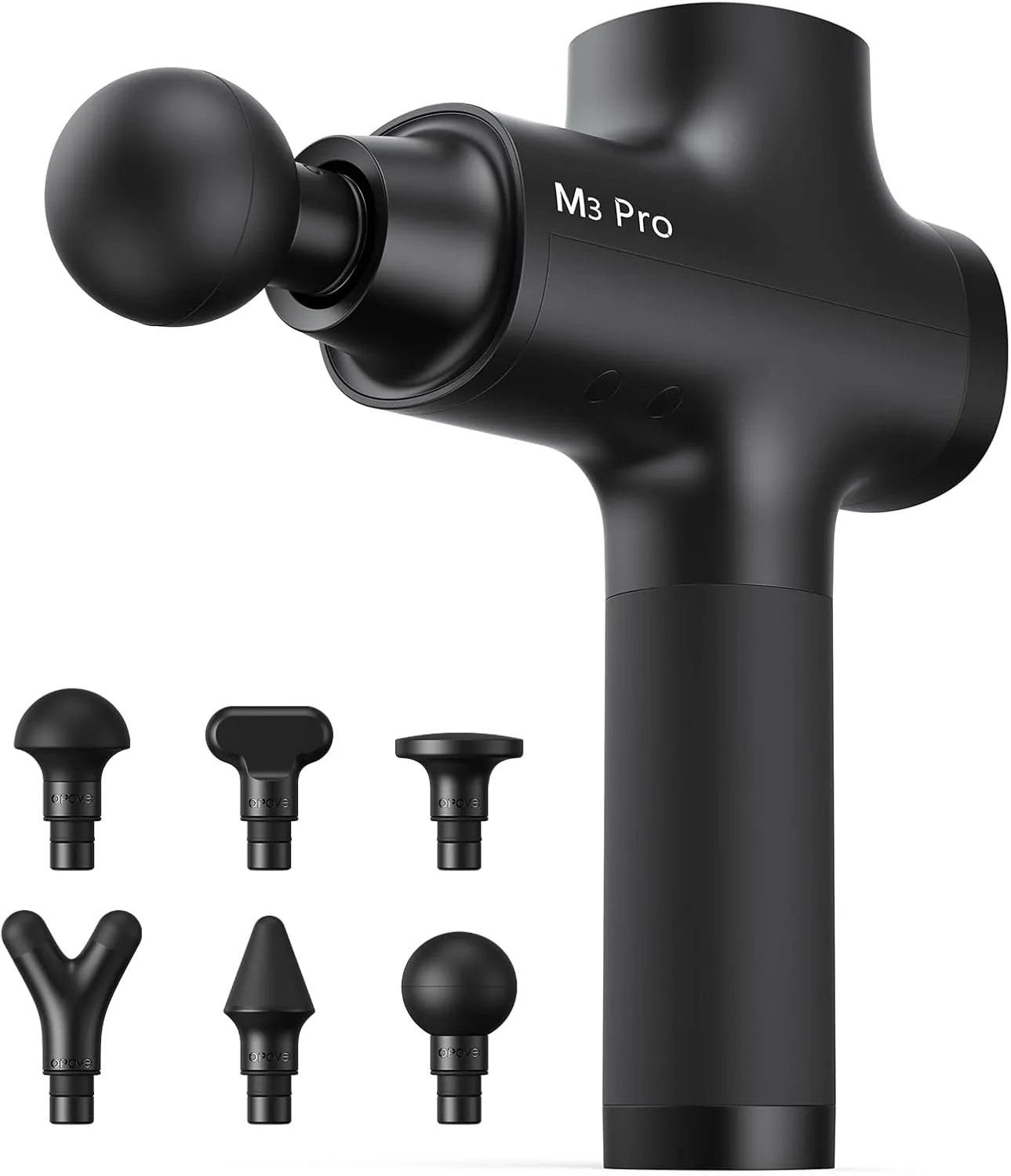 USD 97.49
Opove M3 Pro 2 Massage Gun Deep Tissue Percussion Muscle Massager for Workout, Handheld Percussive Therapy Fascia Gun for Athletes Fast Recovery 4-8 Hours Long Battery Life, Powerful, Quiet, Black
You Get What You Pay For - We work out daily and invest a lot of time and effort into our…
View Details
USD 119.99
Sharper Image PowerBoost Max Massage Gun [2026 Version] Anti-Stall Deep Tissue Percussion Massager| 7 Speeds| Workout Muscle Recovery| Pain Relief| Back & Shoulder Massage Tool| Gifts for Men Women
FROM THE #1 MASSAGE BRAND IN AMERICA: Deep tissue percussion built for real recovery, not…
View DetailsRelated Articles
- Massage Gun Buying Guide for Couples and Shared Households
- Desktop Charging Station Buying Guide for Heat-Conscious Buyers
- Ekrin Athletics Bantam Mini Buying Guide for Compact Deep-Tissue Care
- Massage Gun Speed Settings Buying Guide for Controlled Percussion
- Massage Gun Buying Guide for Desk Workers With Tight Shoulders
- Massage Gun Amplitude Buying Guide for Deep Muscle Reach