
Massage Gun Buying Guide for Shoulder and Upper Back Reach
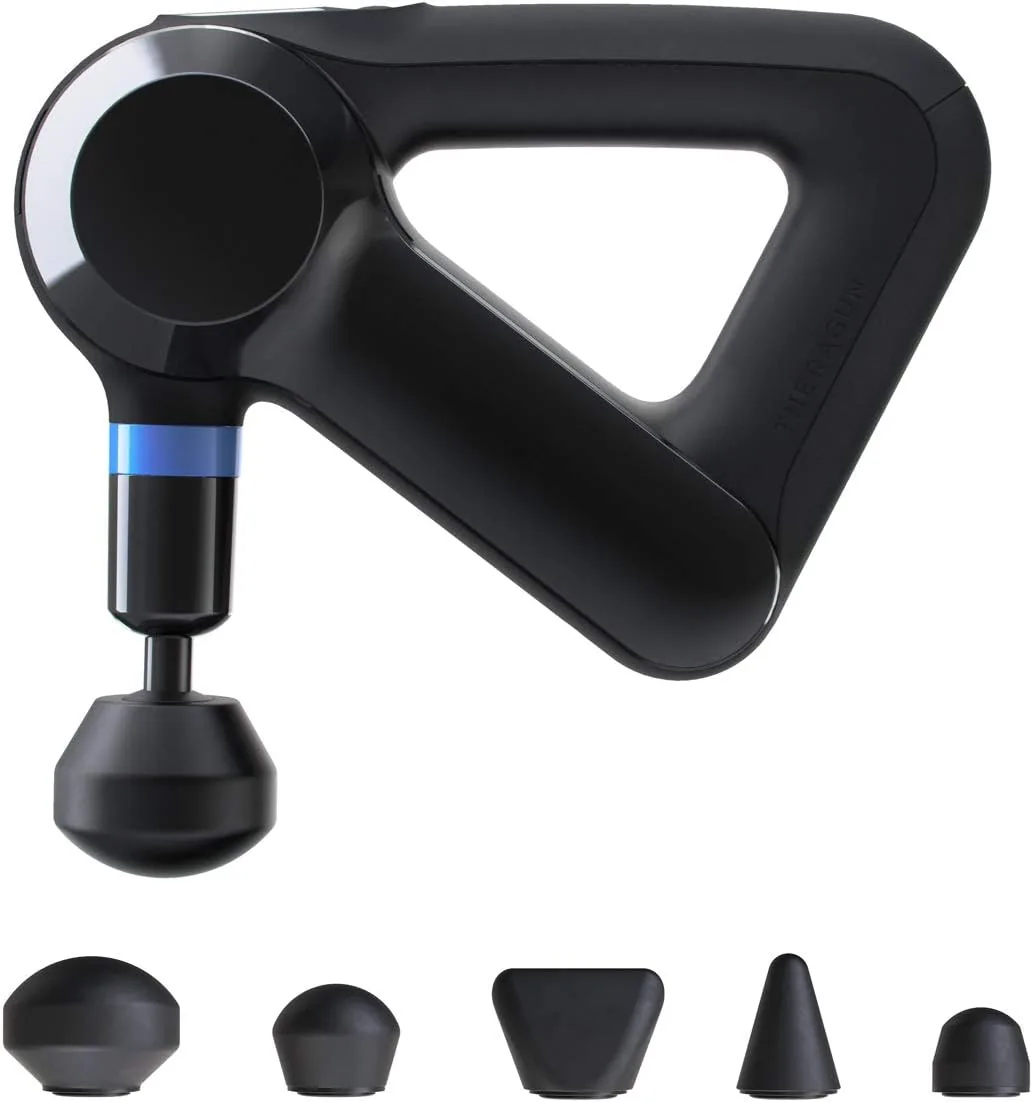
If you are shopping for a massage gun for shoulder and upper back relief, prioritize reachability and handle geometry over raw stall force. The upper trapezius, rhomboids, and posterior deltoids sit at awkward angles behind your body, making them difficult to target independently without straining your wrist or rotator cuff.
Many devices deliver excellent power for dense tissue like the glutes or quadriceps, but fall short when you try to maneuver them between your shoulder blades. A high-amplitude device is useless for upper back therapy if you cannot angle the arm correctly to treat the affected muscle. Here is how to evaluate a shoulder percussion massager to ensure you get genuine, solo relief.
Why upper-back reachability should guide your purchase
Massage gun reachability determines whether you can treat your own trigger points or if you will need a partner's help every time your neck stiffens. The distance from the handle to the treatment head, combined with the head's angle, dictates your working range. Standard straight-handle pistols force your arm into extreme internal rotation just to reach the center of your back. This forces the very muscles you are trying to relax into deep, fatiguing contraction.
When you hold a straight device backward over your shoulder, your biceps, anterior deltoid, and wrist extensors engage heavily to stabilize the motor's weight. By the time you locate the knot under your scapula, your arm is shaking from fatigue. This defeats the purpose of recovery. You need a design that allows your arm to remain in a neutral, relaxed position while the head does the work.
Handle shapes that help with shoulder-area access
For treating the shoulders and upper back, handle geometry is the most critical hardware specification. You will encounter three primary shapes on the market:
- Traditional Pistol Grip: The standard 90-degree angle. Great for the lower body, but difficult for your own upper back. You have to hyperextend the shoulder to reach past your latissimus dorsi.
- Triangular or Multi-Grip: These feature a closed loop or wedge shape. They let you choke up on the handle or grip from the side, drastically changing the entry angle so you can reach across your spine comfortably.
- Adjustable or Articulating Head: Devices where the massage head itself tilts or locks into different angles. This physically moves the percussion point without requiring your arm to shift.
A triangular handle allows you to push the head straight down into the top of your shoulder (the upper traps) using only gravity and a straight arm. To treat the area between the shoulder blades, grip the lower section of the triangle and pull the device horizontally across your back with your elbow tucked tight to your ribs.
Weight balance for one-handed use
Total weight matters, but weight distribution prevents forearm burn. A top-heavy device—where the large motor sits far away from the handle pivot point—creates severe leverage drag. If a massager weighs over two and a half pounds and concentrates that weight at the head, holding it behind your neck for ten minutes will exhaust your grip.
Look for an upper back massage gun with a center of balance resting directly above your knuckles. Brushless motors allow manufacturers to shrink the housing significantly, moving the mass closer to the user's hand. When testing a device, hold it in your operating hand and extend your arm straight out. If the wrist immediately droops, the tool will be difficult to use on your posterior chain.
Attachments and settings for upper-body muscles
The tissue density in your upper back varies. The traps are thick and fibrous, while the rhomboids sit thin and tight against the bone. Using the wrong attachment makes the treatment ineffective or painfully uncomfortable.
| Attachment Type | Best Upper-Body Target | Usage Tip |
|---|---|---|
| Bullet / Cone | Deep shoulder knots, precise trigger points | Use low speed. Keep moving; never hold directly on the spine or scapula bone. |
| Fork / Double Prong | Alongside the cervical spine, Achilles | Straddle the vertebrae carefully. Excellent for the base of the neck. |
| Flat / Paddle | Upper trapezius, broad latissimus dorsi | Provides diffuse pressure. Great for loosening large surface areas quickly. |
| Cushion / Soft Ball | Sensitive rhomboids, bony areas | Use if you are new to percussion therapy or have low pain tolerance. |
Speed settings should start low. High-impact percussion (often advertised as 3,200 strokes per minute) is rarely appropriate for the neck and upper back. Start on the lowest RPM setting to warm up the fascia, and only increase the speed if the tissue feels dense enough to require deeper penetration.
When to use a shoulder percussion massager with a partner
Even the best-designed massage gun for shoulder and upper back use has physical limits. The inferior angle of approach makes it nearly impossible to apply sustained, heavy pressure to the lower rhomboids on your own. If you have a severely locked muscle that requires deep, static compression, you will need a partner.
Hand the device to someone else and lie face down. A second person can apply downward force from a high angle, using the massager completely flat against your back. This removes your arm fatigue from the equation entirely and allows the operator to lean their bodyweight into the tool.
Addressing upper back pain causes and ergonomic setups
Recovery tools do not exist in a vacuum. If you suffer from chronic upper-back tightness, your equipment setup is likely contributing to the problem. Pairing a percussion tool with an ergonomic office chair is an effective way to resolve mechanical back pain.
Instead of just treating the symptoms, address the root cause of your sitting posture. The SIHOO M18 Ergonomic Office Chair offers four distinct support points (head, back, hip, and hands) to distribute weight evenly for $139.98. If you need broader lumbar and shoulder support, the GABRYLLY Ergonomic Office Chair ($199.99) features a high-back design that accommodates larger frames and promotes an upright posture. Both chairs hold impressive 4.4/5 Amazon ratings from thousands of users.
| Product | Price | Key Ergonomic Feature | Best For |
|---|---|---|---|
| SIHOO M18 Ergonomic Office Chair | $139.98 | 4-point support system (head, back, hip, hands) | Standard desks; correcting forward head posture |
| GABRYLLY Ergonomic Office Chair | $199.99 | High back, 4-point support, wider seat | Taller users; comprehensive upper-back relief |
| Nouhaus Ergo3D Ergonomic Office Chair | $296.99 | 3D lumbar support, premium mesh | Business professionals needing dynamic movement |
For users dealing with tension caused by prolonged standing or desk work, the Nouhaus Ergo3D ($296.99) steps up with advanced mesh contouring designed specifically for business professionals. By upgrading your seating and combining it with a reachability-focused massage device, you tackle muscle fatigue from both ends.
Actionable takeaways
- Test your reach: Before buying, simulate the handle shape with a similar object at home. Ensure you can touch the area between your shoulder blades without rotating your wrist painfully.
- Prioritize multi-grip handles: Triangular or looped handles provide the angles necessary for independent upper-back treatment.
- Check the balance: The motor housing must sit close to your hand. Avoid top-heavy designs if you plan to treat your own shoulders.
- Use the right head: Reserve the bullet attachment for meaty shoulder knots. Switch to the cushion head for the bony upper back.
- Fix your environment: Address your daily seating. A supportive ergonomic chair will stop the upper-back knots from forming in the first place.
Related Resources
Related Products
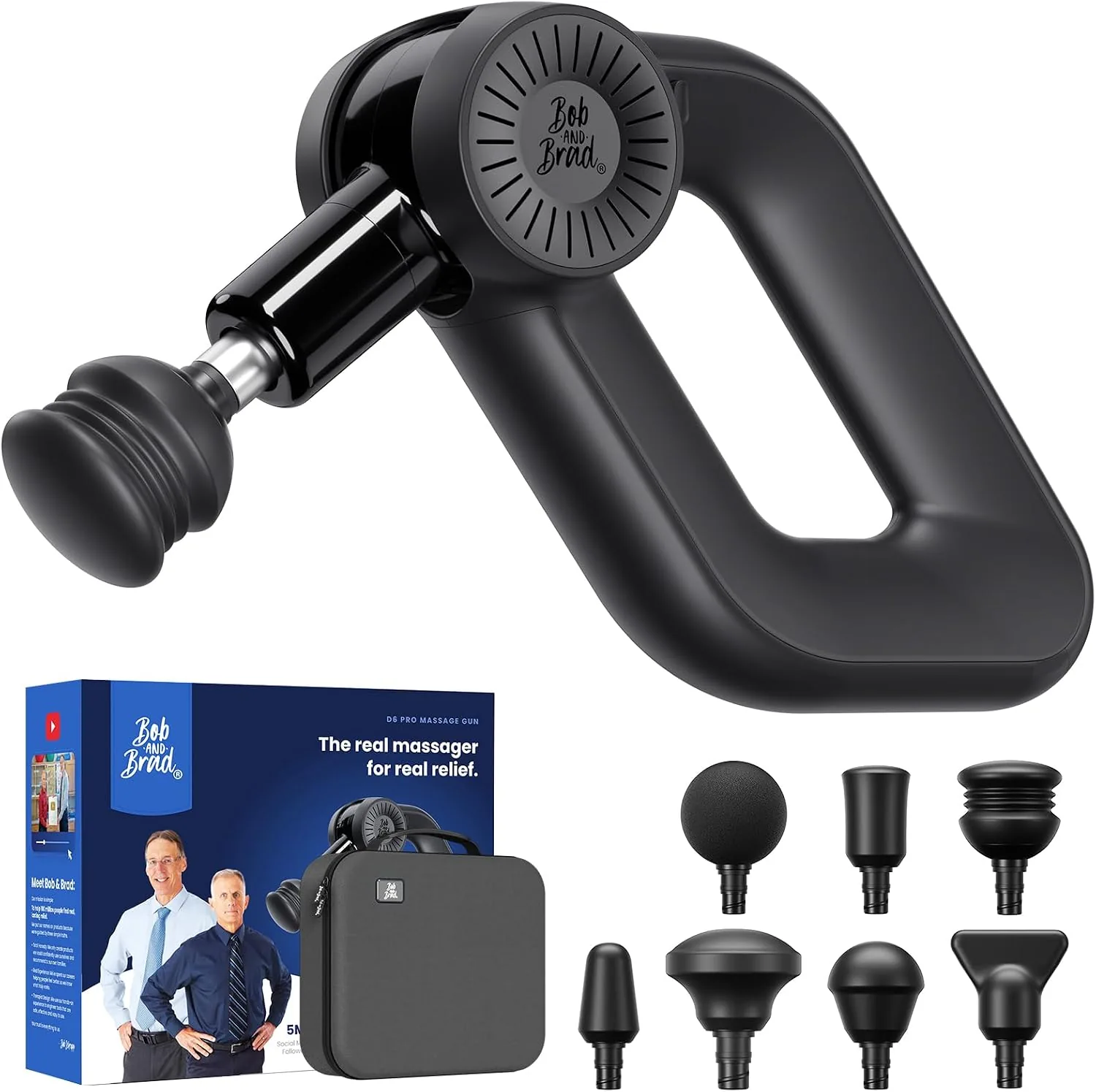 USD 149.99
BOB AND BRAD D6 Pro Massage Gun Deep Tissue Percussion with 16mm Amplitude 85lbs Stall Force, FSA Eligible & HSA Approved Professional Muscle Massager for Athletes, Quiet Electric Back Massager
Developed by Famous PTs Bob & Brad + World-Class Support: Created by the "Two Most Famous…
View Details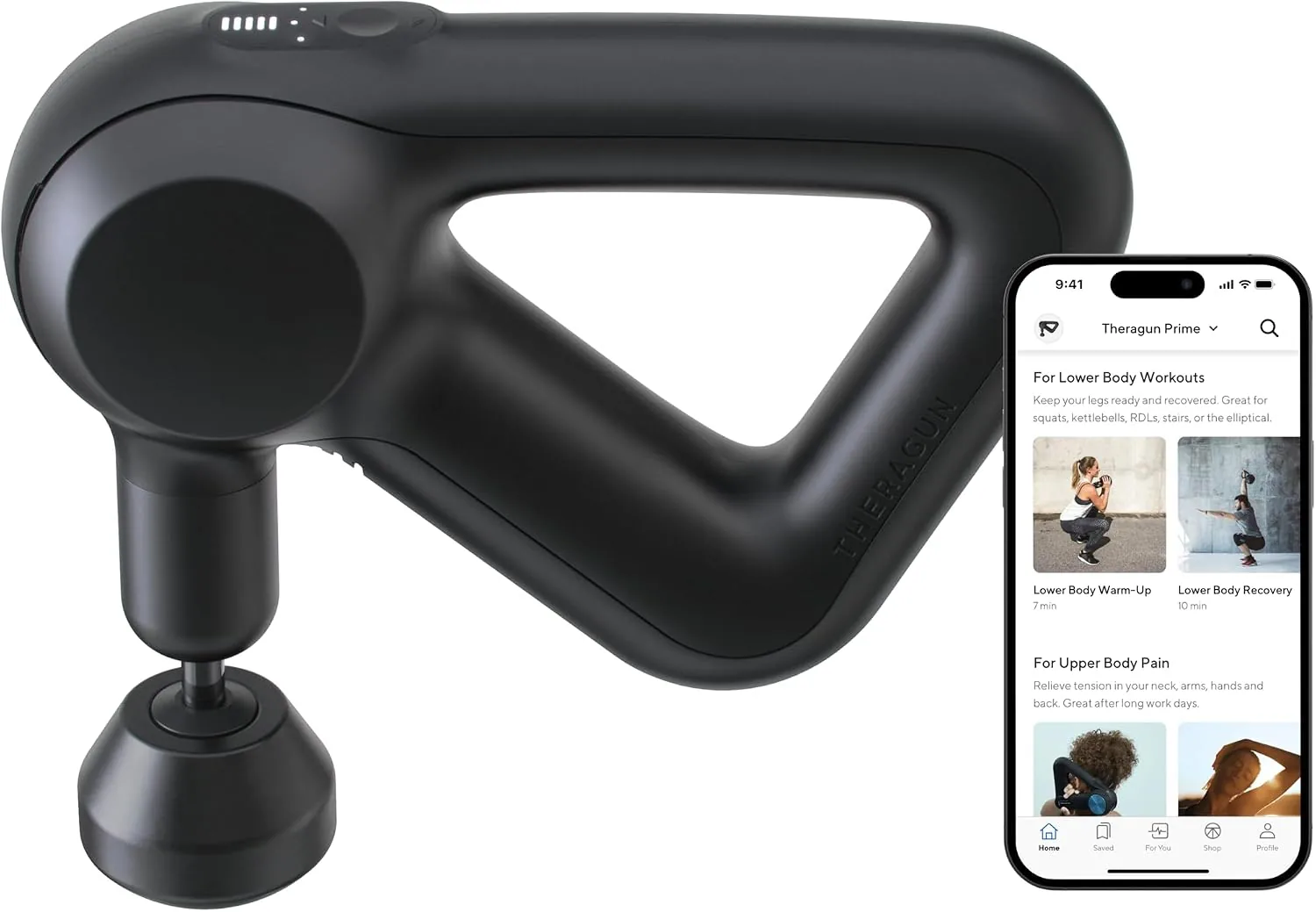 USD 239.99
TheraGun Therabody Prime (4th Generation) - Deep Tissue Percussion Therapy Massage Gun - Bluetooth Enabled, Personal Massager for Pain Relief in Neck, Back, Leg, Shoulder and Body
Simplified Smart Percussive Massage Therapy: Prioritizes the essential massage gun featur…
View Details
USD 261.75
Theragun Elite Bluetooth Massage Gun - Ultra-Quiet Percussion Massager for Pain Relief in Neck, Back, Leg, Hand, Shoulder and Body
16mm Amplitude: Reaches 60% deeper into muscle tissue than standard vibration massagers t…
View Details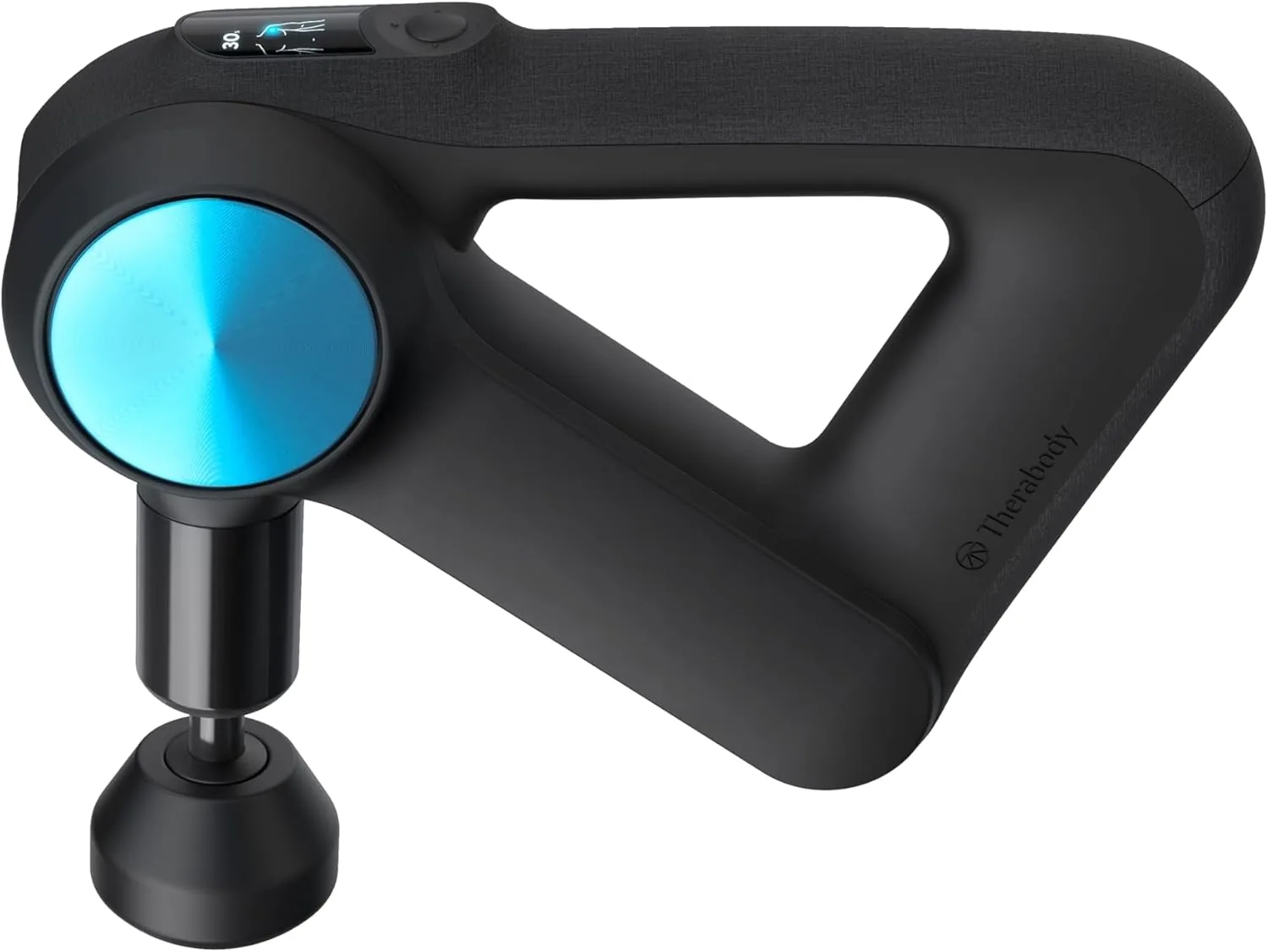 USD 449.25
TheraGun Pro Handheld Deep Tissue Massage Gun - Bluetooth Enabled Percussion Massage Gun & Personal Massager for Pain Relief & Circulation in Neck, Back, Leg, Shoulder and Body (Black - 5th Gen)
Smarter and Quieter: Theragun PRO is the ultimate deep tissue personal massager for recov…
View DetailsRelated Articles
- Massage Gun Buying Guide for Forearm Recovery and Hand-Intensive Work
- Desktop Charging Station Buying Guide for Device Charging During Video Calls
- Massage Gun Buying Guide for Calves and Feet
- Massage Gun Buying Guide for Desk Workers With Tight Shoulders
- Ergonomic Massage Gun Buying Guide for Reaching Your Back
- Massage Gun Amplitude Buying Guide for Deep Muscle Reach