
Massage Gun Speed Settings Buying Guide for Controlled Percussion
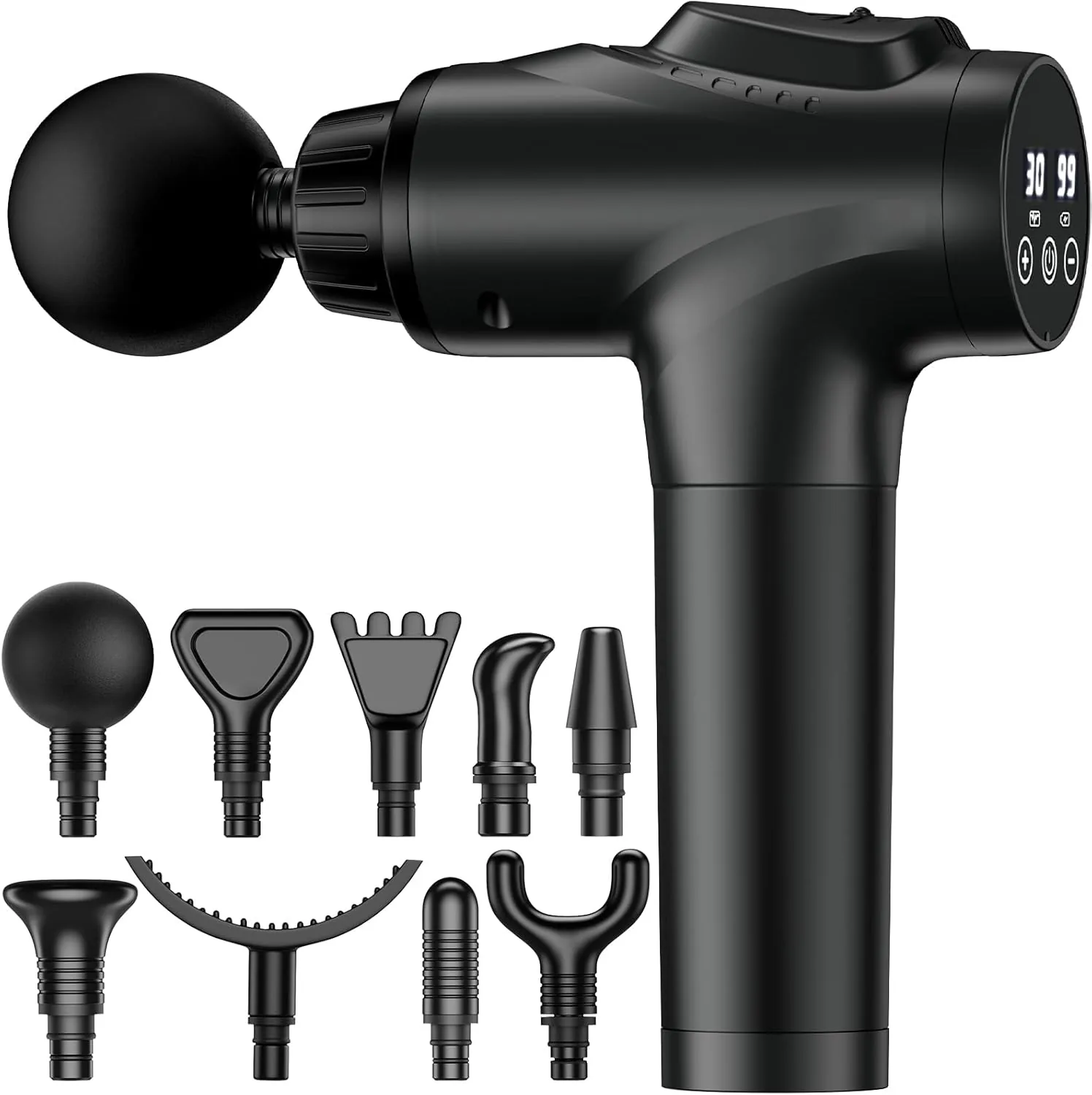
Speed is the most misunderstood control on a massage gun. Your chosen setting determines how fast the head strikes muscle each minute — the percussions per minute, or PPM — and that rate, together with amplitude and stall force, decides whether a session feels like a light wake-up call or deep-tissue work. This massage gun speed settings buying guide explains what the numbers actually mean, why more levels aren't automatically better, and how to match a device's control style to the way you really recover.
What massage gun speed settings actually control
Every percussive therapy device pulses the attachment head against muscle at a rate you select. Turn the speed up and the strikes come faster; turn it down and each strike lingers longer on the tissue. That rate interacts with two other specs. Amplitude is how deep each strike travels — the Theragun Elite, for example, uses a 16mm amplitude that the manufacturer says reaches 60% deeper into muscle than standard vibration massagers. Stall force is how hard you can press before the motor bogs down.
Speed is also the one variable you adjust mid-session, which is why the design of the speed control matters as much as the raw numbers. A gun with a huge PPM range but clumsy controls is harder to use well than a simpler device with a dial or clear buttons you can operate one-handed while it's pressed against your back.
Preset speed levels vs. a continuously adjustable range
Devices handle massage gun intensity levels in two ways. Preset models offer a fixed number of speeds — commonly three to five — selected by repeated button presses. Others, typically app-connected models, offer a continuously adjustable range you fine-tune from a phone.
Which is better? It depends on how you train. Presets are fast and unambiguous: low for warm-ups, medium for general recovery, high for stubborn knots. A continuous range sounds superior, and for experienced users who know exactly what their calves respond to, it is. But for most buyers, five well-spaced presets cover the practical ground, and presets are easier to change without looking. Don't pay extra for a 20-speed gun if you'll only ever use three of those settings.
- Preset levels suit people who want simple, repeatable routines.
- Continuous adjustment suits users who want to dial in intensity precisely and don't mind pairing an app.
- Whatever the design, check the lowest setting. A device whose floor is too high is useless on sore or sensitive areas.
Choosing gentler settings for sensitive muscles
Start low. Always. Neck, forearms, calves, and any area that's already sore or recently injured respond better to a slower stroke rate with light pressure than to a high-speed barrage. At lower PPM, you can feel the muscle release under the head and stop before you overshoot. At high speed on tender tissue, the sensation blurs, and it's easy to work an area longer or harder than it wants.
A sensible protocol: begin at the lowest setting for 30–60 seconds per muscle group, and increase speed only if the pressure feels productive rather than punishing. If a device's gentlest setting still feels aggressive, that's a design problem, not a technique problem — some budget guns simply don't go low enough. Read reviews that focus on the low end of the range, not the top, since manufacturers love advertising peak PPM and stay quiet about the floor.
When higher percussion speeds help
High settings earn their keep on dense, tolerant tissue: glutes, hamstrings, quads, and the mid-back of someone who trains hard. Faster percussion can help flush large muscle groups after heavy sessions and works well when you keep the head moving rather than parking it on one spot. Depth matters here too — the TOLOCO deep tissue gun, for instance, advertises high penetration force with a 12mm stroke, and at $39.99 with a 4.4-star rating across more than 62,000 reviews, it's a strong budget pick for people who mostly want power on big muscles.
Two cautions. First, high speed on bone, joints, or the neck is a bad idea regardless of your pain tolerance. Second, speed is not depth — a fast gun with shallow amplitude vibrates; a slower gun with long amplitude works tissue. If deep work is your goal, check amplitude before you check the PPM ceiling.
App-guided vs. on-device speed controls
Control style splits the market. On-device controls — a button, a dial, an LED display — are immediate and work anywhere. App-guided controls add guided routines, force feedback, and fine speed adjustment from your phone. Therabody's Prime (4th Generation), at $319.99, is built around simplified smart percussive therapy that prioritizes essential features over extras, while the Bluetooth-enabled Theragun Elite at $349.00 leans further into app-connected control for users who want that level of tuning.
The honest trade-off: apps are genuinely useful for the first few weeks, when guided routines teach you where and how long to work each muscle. After that, most people press the same button every time. If you're disciplined and routine-driven, save money with on-device presets. If you're motivated by guided sessions and data, the connected models justify their price.
Buying an adjustable speed massage gun: how three models compare
Here's how three popular options stack up on the things that actually determine how well you can control intensity:
| Model | Price | Rating | Intensity story | Best for |
|---|---|---|---|---|
| TOLOCO Massage Gun | $39.99 | 4.4/5 (62,230 reviews) | 12mm penetration force, deep-tissue focus | Budget buyers targeting large, dense muscle groups |
| BOB AND BRAD C2 | $69.94 | 4.6/5 (13,409 reviews) | Designed by physical therapists; FSA/HSA eligible | Buyers who want a therapist-designed routine at mid-range cost |
| Therabody Theragun Elite | $349.00 | 4.5/5 (4,045 reviews) | 16mm amplitude, Bluetooth speed control, ultra-quiet motor | Serious athletes who want deep work plus app-guided precision |
Recommendations by situation: on a tight budget and mainly hammering sore glutes and hamstrings after lifting? The TOLOCO delivers deep-tissue emphasis for $39.99. Want professional guidance baked into the device — plus the ability to pay with FSA or HSA funds? The BOB AND BRAD C2, designed by two well-known physical therapists, is the smart middle path at $69.94. If you train seriously, want the deepest stroke available, and value quiet operation plus Bluetooth speed control, the Theragun Elite's 16mm amplitude and app integration make the $349 price defensible.
Checklist before you click buy
- Confirm the lowest speed setting is gentle enough for sensitive areas.
- Decide between presets and continuous adjustment — and pay only for the one you'll use.
- Check amplitude alongside PPM; depth matters more than top speed for deep-tissue work.
- Verify you can operate the speed control one-handed.
- Skim reviews for comments on the low end of the range, not just the top.
Set expectations before your first session: start on the lowest setting, work each muscle group briefly, and increase speed only when the tissue asks for it. A modest gun used with good judgment beats a premium gun used at full blast — every time.
Related Products
USD 19.49
APHERMA Massage Gun, Muscle Massage Gun for Athletes Handheld Electric Deep Tissue Back Massager, Percussion Massage Device for Pain Relief with 30 Speed Levels 9 Heads Black
Beat soreness, back pain, and stress: For those who don't want muscle soreness to slow th…
View Details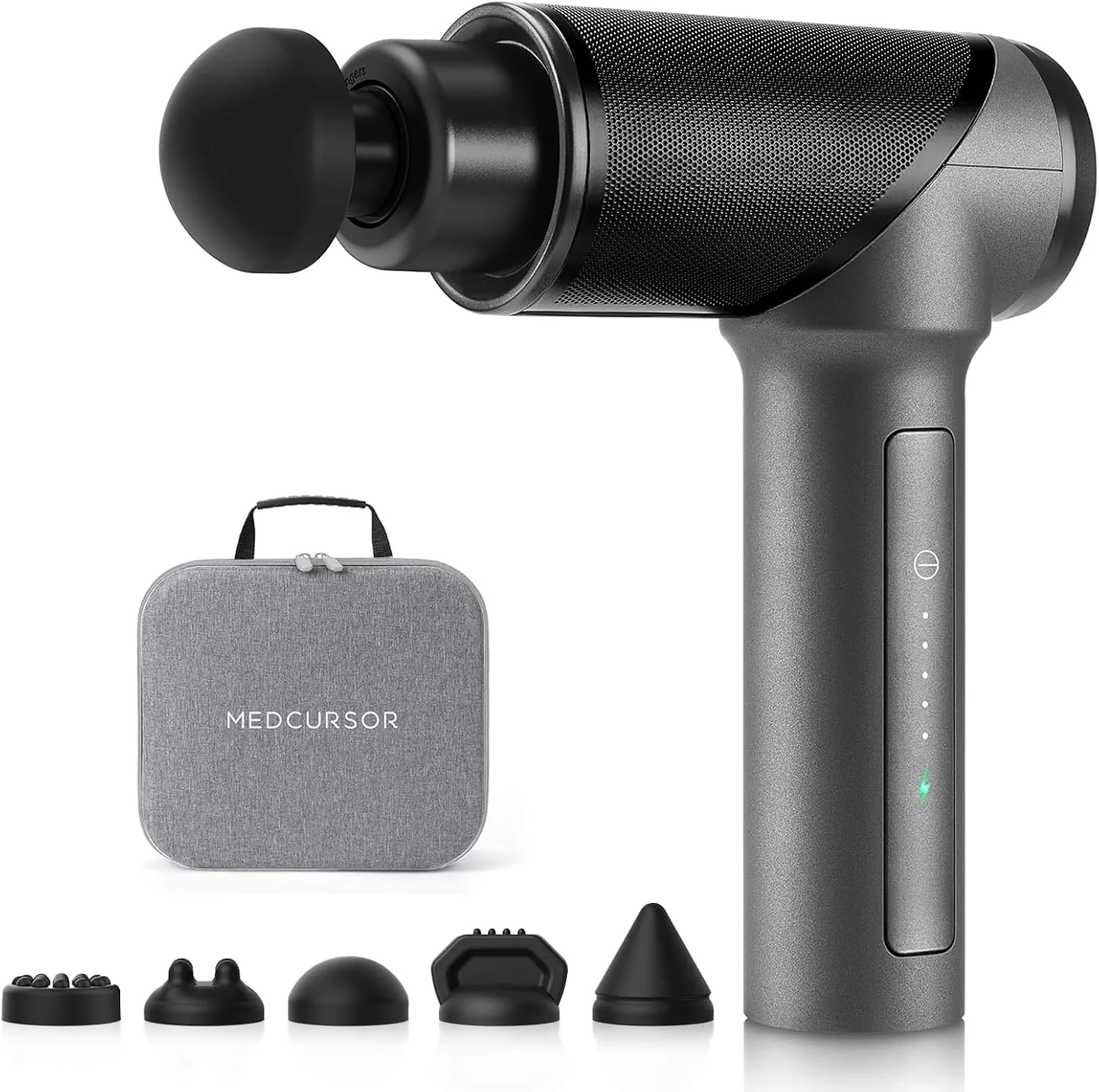 USD 29.99
Medcursor Massage Gun - High Intensity Brushless Motor, Handheld Percussion Deep Tissue Massager with 6 Massage Heads for Sore Muscle and Stiffness, Valentines Day Gifts (Gray)
Powerful Professional Massage Gun: This massage gun is designed with a high-torque brushl…
View Details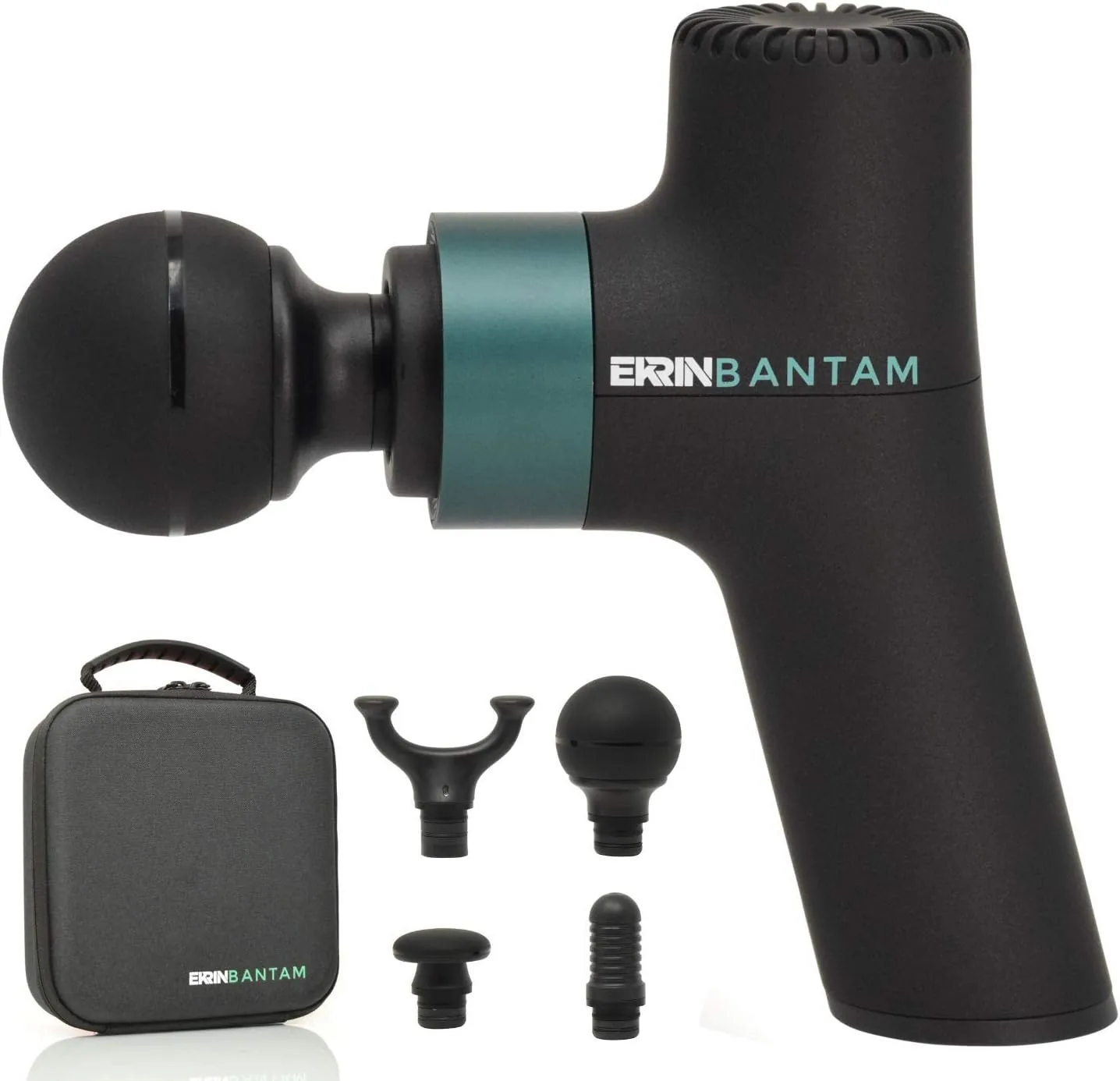 USD 89.99
Ekrin Athletics Bantam Mini Massage Gun - Compact Deep Tissue Muscle Massager with Adjustable Speeds & 4 Attachments - Long Battery Life, Lightweight, Travel Friendly
Compact & Powerful: Despite its compact design, this mini massage gun doesn't compromise …
View Details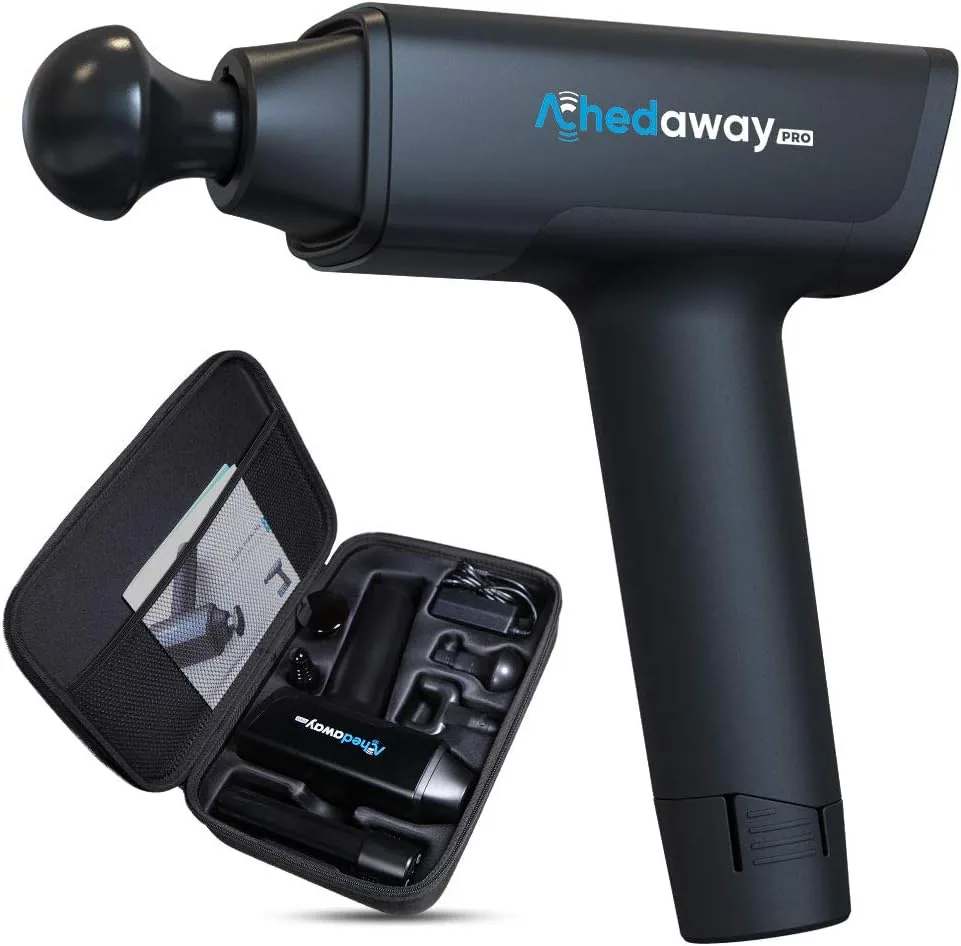 USD 224.25
Achedaway Pro 16mm Amplitude Massage Gun Deep Tissue Percussion Muscle Massager for Athletes Handheld Muscle Electric Gun - Carrying Case Included
☆ Strong Stall force & Deeper Massager: 80lbs stall force and 16 mm amplitudes help to re…
View DetailsRelated Articles
- Satechi 108W Pro USB-C PD Desktop Charging Station Buying Guide
- Desktop Charging Station Buying Guide for Dorm Room Device Charging
- Massage Gun Buying Guide for Pre-Workout Muscle Activation
- Massage Gun Amplitude Buying Guide for Deep Muscle Reach
- APHERMA Massage Gun Buying Guide for Affordable Athlete Recovery
- Massage Gun Buying Guide for Couples and Shared Households