
Pickleball Paddle Specs Explained: Core, Face and Weight
Pickleball gear is deceptively easy to buy wrong, because the vocabulary is borrowed from tennis while the physics is closer to table tennis. Paddle marketing leans on three numbers — face material, core thickness and weight — and each one trades power against control in a way a single "best paddle" answer cannot capture. Here is what each specification actually does to the ball.
The three specifications that decide the feel
| Spec | Range in stock | What it changes |
|---|---|---|
| Core thickness | 14 mm vs 16 mm | Thicker core = longer ball dwell = more control; thinner = faster, livelier response |
| Face material | fiberglass vs carbon | Fiberglass is springier and easier to use; carbon grips the ball for spin and predictable control |
| Weight | ~7.4–8.5 oz | Lighter = faster hands at the kitchen; heavier = more drive through the ball |
In practice the categories blur, which is exactly why the price spread from $60 to $190 confuses new players. The paddles in the middle are the most honest: you are paying for which trade you prefer, not for "more" of everything.
The budget tier: playable, replaceable, honest
JoncAye sets at $42.68 and PRO-SPIN sets at $59.99 are built for the first six months of the sport: two or four paddles, balls, a bag, no single paddle you would mourn losing. The honest limitation is feel — the faces are softer and the sweet spot smaller, so dinks and resets take more technique. That is fine, because they are also the cheapest way to find out whether you want power or control.
The control side of the shelf
The 16 mm carbon class is the sport's default answer, and Vatic Pro Prism 16mm at $74.99 is the reference price for it. Six Zero DBD Control 14mm at $134.99 takes the control recipe thinner for faster hands at the kitchen, at the cost of some dwell. Selkirk LUXX Control at $149.99 and its Florek edition at $187.49 represent the same philosophy at the premium end. JOOLA Perseus CAS 16mm at $149.96 is the competition answer: control for the tournament player who hits hard anyway.
The power side of the shelf
Power paddles trade the soft touch for a face that does the work. Paddletek Bantam EX-L at $74.99 is the classic entry; Gearbox GX5 at $134.99 and Gearbox CX11E at $164.99 go the edgeless, solid-core route; CRBN X Series at $172.49 and JOOLA Charged Surface at $187.46 push the same direction at the top of the range. Diadem VICE at $82.46 is the concept experiment — an EVA core — and it matters mostly as evidence that the category still has room to move.
Bags: capacity first, branding second
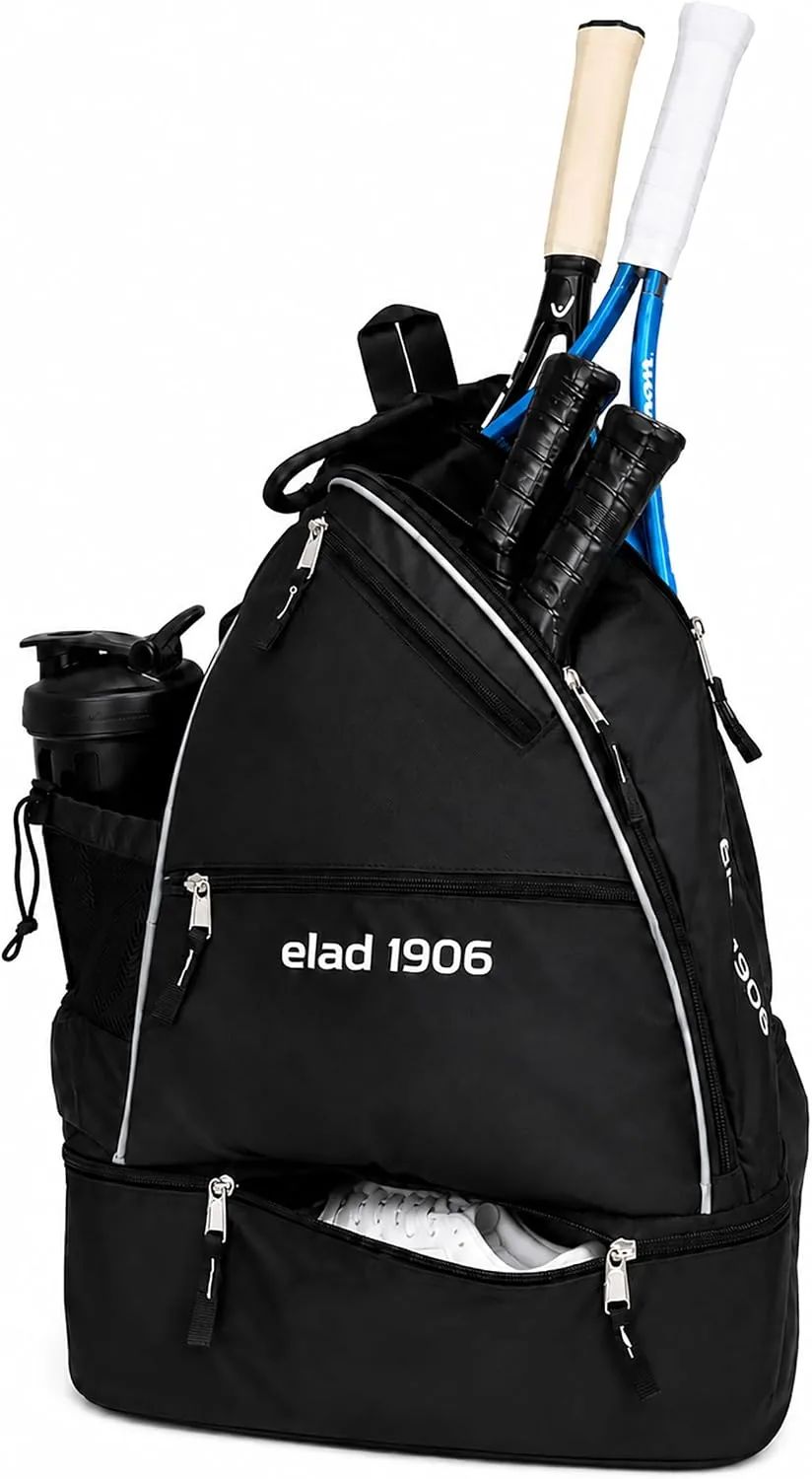
Pickleball bags have one real specification: how many paddles and whether a change of clothes rides along. ELAD 1906 sling at $24.74 and Sucipi quilted sling at $24.74 carry one paddle and a phone; Franklin backpack at $28.62 and DBXINY at $29.17 carry four-plus paddles; Selkirk Day Backpack at $36.74 sits between; CRBN backpack at $74.96 and CRBN tour bag at $74.96 are the paddle-company premium versions of the same two shapes.
Choosing in one pass
- New to the sport → a set under $70. The paddle you end with will not be the paddle you started with.
- You miss long → more dwell: 16 mm control class.
- You get dinked to death at the net → thinner face, lighter swing.
- You already hit hard → power paddle, and expect to relearn your touch for a week.
The sport's only real rule: the paddle that wins points at your level is the one that fits your miss. Everything else is marketing borrowing tennis words.
Related Products
 USD 24.74
ELAD 1906 Pickleball Sling Bag with Shoe Compartment for Men & Women – Large Paddle Backpack with Fence Hook & Water Bottle Holder – Fits 2 Pickleball Paddles or Tennis Rackets
Designed for Pickleball & Tennis Players Holds 2 pickleball paddles or up to 2 tennis rac…
View Details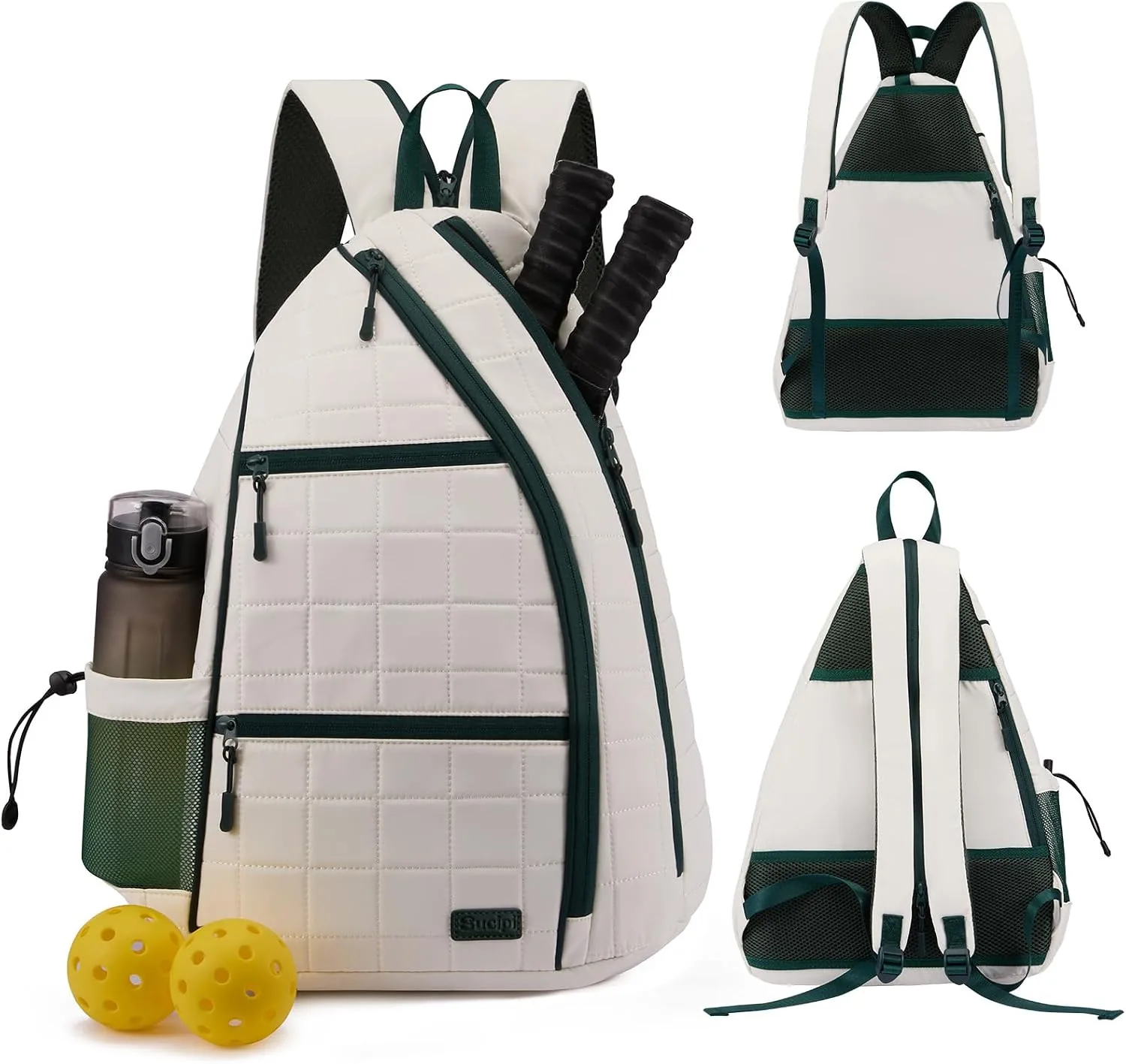 USD 24.74
Sucipi Pickleball Bag for Women, Pickleballs Backpack with Fence Hook Reversible Quilted Crossbody Sling Bags Pickle Ball Paddle Bag-Holds Paddles, Pickleballs Accessories,Green White
WATERPROOF & DURABLE ☛ The pickleball sling bag is made of tear-resistant, water-resistan…
View Details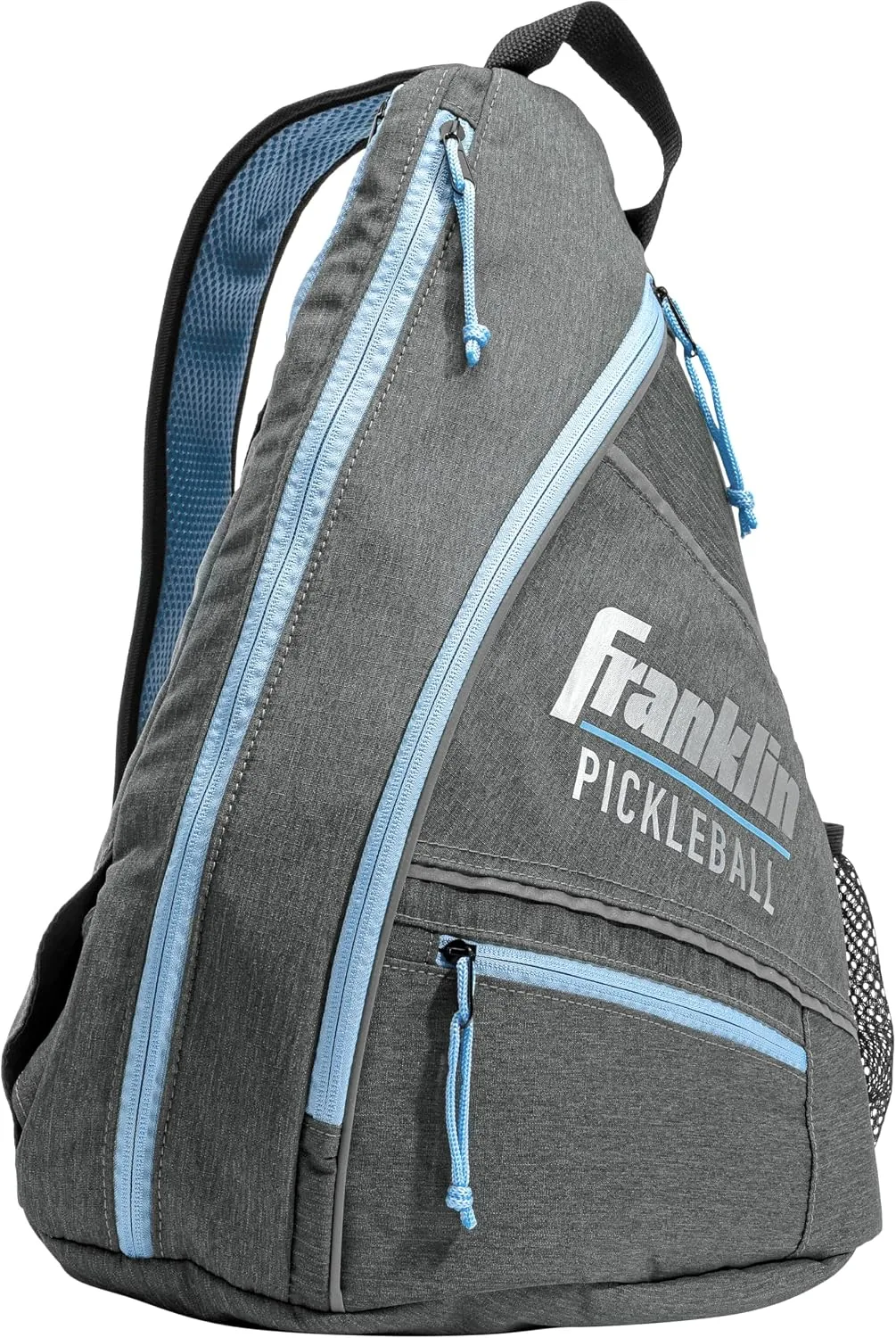 USD 28.62
Franklin Sports Pickleball Sling Bag Official Pickleball Bag of The U.S. Open Pickleball Championships Adjustable Gray/Blue
HOLDS IT ALL: This sling bag effortlessly holds all your pickleball gear, including up to…
View Details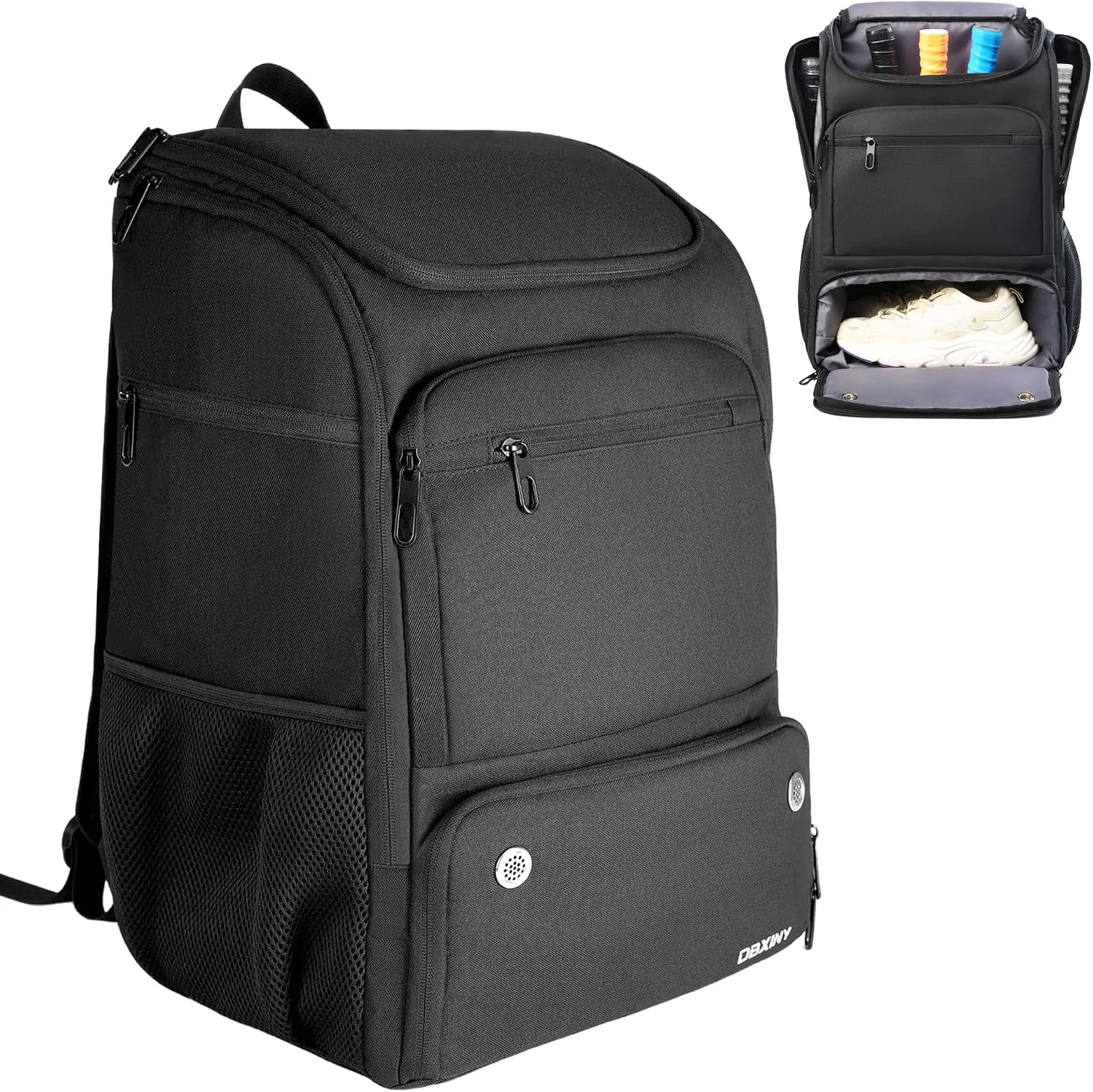 USD 29.17
DBXINY Pickleball Bag Backpack Fits 4+ Paddles, Large Pickle ball Bags for Men and Women with Shoe Compartment and Fence Hook, Great Pickleball Gifts
ALL-IN-ONE PICKLEBALL BACKPACK - The DBXINY pickleball paddle bag features 12 total compa…
View DetailsRelated Articles
- Standing Desk or Ergonomic Chair First? The Trade the Specs Don't Show
- Camping Gear Sorted by How You Camp, Not by Product Type
- Mattress Topper Cooling Explained: Gel, Latex and the Fine Print
- How ANC Tiers Actually Work: What Separates a $30 Pair From a $400 Pair
- Smart Lighting Protocols Explained: WiFi, Bluetooth, Zigbee Hub or No Radio
- Carry-On Luggage Explained: What Aluminum Frame Really Means