
Massage Gun Buying Guide for First-Time Percussion Therapy Buyers
First time massage gun buying guide: what actually matters
A good beginner massage gun costs roughly $26 to $130, runs quietly, offers a few speed settings, and ships with three to five attachments. You do not need to spend more than that on your first percussion therapy device. Everything beyond those basics is either a luxury or a marketing gimmick. Once you understand four or five plain specifications, choosing a model becomes surprisingly easy.
Percussion therapy devices deliver rapid pulses into muscle tissue, helping relax tight spots after workouts, long workdays, or travel. Brands in this category run from budget names like TOLOCO and APHERMA to premium players like Therabody and Hyperice. The trick for a first-time buyer is matching the price tier to how often you will actually use the device.
The essential massage gun features for beginners
Forget the spec-sheet arms race. A beginner massage gun needs five things:
- Adjustable speed levels so you can start gentle and work up.
- A brushless motor, which runs smoother and lasts longer than cheaper brushed motors. The Medcursor Massage Gun, for example, is built around a high-torque brushless motor at $39.99.
- Multiple attachments for large muscle groups, joints, and pinpoint work.
- Decent battery life — anything that dies mid-session ends up abandoned in a drawer.
- Quiet operation, especially if you will use it while watching TV or in a shared space.
App connectivity, heated heads, OLED screens? Nice, not necessary. Buy the fundamentals first.
Understanding amplitude, speed, and pressure
Three terms dominate every product page. Here is the plain-English version.
Amplitude is how deep the head travels into the muscle with each strike. Deeper is not automatically better for beginners. Budget models like the TOLOCO deep tissue massage gun deliver around 12mm of penetration force — plenty for general soreness. At the premium end, the Theragun Elite advertises 16mm of amplitude, reaching significantly deeper than standard vibration massagers. That depth suits serious athletes but is arguably overkill for post-desk shoulder tension.
Speed is measured in percussions per minute. More speed settings give you finer control. Most people use low speeds for warm-ups and sensitive areas, and higher speeds for large muscles like quads and glutes.
Pressure is how hard you push the gun into your body. A common beginner mistake is pressing hard, assuming more pressure means more benefit. Let the device do the work; moderate pressure and consistent contact beat brute force every time.
Choosing a manageable size and weight
A massage gun you cannot comfortably hold for two minutes is useless. If you plan to treat your own back and shoulders, weight and handle grip matter more than raw power.
Compact models win here. The Hyperice Hypervolt Go 2 ($139.00) is designed to be small and light enough to fit in your hand and your bag, with Quiet Glide technology to keep noise down. If you travel or keep the device in a gym bag, a compact form factor beats a bulky professional unit. Larger, higher-amplitude guns trade portability for depth — a reasonable swap if the device lives on your nightstand and mostly works your legs.
Useful attachments without unnecessary extras
Most beginner massage guns ship with four to six heads. You will realistically use three:
- A large ball head for big muscle groups.
- A flat head for denser areas.
- A bullet or pinpoint head for knots and trigger points.
Anything beyond that — wedge heads, heated attachments, cold heads — rarely earns its place. One exception worth knowing: the RENPHO Massage Gun with Heat and Cold ($109.99) adds temperature therapy and is endorsed by the International Massage Association, making it a genuine option if heat or cold treatment appeals to you. If you are unsure, start with the standard three-head setup.
Safety, comfort, and return-policy considerations
Never use a percussion therapy device on bones, joints, the front of the neck, or injured tissue, and stop if anything goes numb or sharply painful. Some soreness after deep work is normal; pain is not.
Before buying, check three things: the return window (a first device is a trial, and you should be able to send it back), the warranty, and whether the seller has a track record. Review volume is a useful honesty signal — the TOLOCO model carries over 62,000 Amazon reviews at 4.4/5, while the Opove M3 Pro 2 ($129.99) holds 4.7/5 across more than 20,000 reviews. A high rating on thousands of reviews is harder to fake than a high rating on a dozen.
Budget-conscious buyers in the US may also notice that the BOB AND BRAD C2 ($69.94) is FSA eligible and HSA approved — designed by physical therapists Bob and Brad — which can lower your out-of-pocket cost if you have a flexible spending or health savings account.
How to choose a massage gun: honest comparison
Here is how four popular models stack up for a first-time buyer:
| Model | Price | Rating | Best for |
|---|---|---|---|
| TOLOCO Deep Tissue Massage Gun | $39.99 | 4.4/5 (62,230 reviews) | First-timers on a budget; ~12mm penetration handles everyday soreness |
| BOB AND BRAD C2 | $69.94 | 4.6/5 (13,409 reviews) | Buyers who want a physical-therapist-designed device; FSA/HSA eligible |
| Opove M3 Pro 2 | $129.99 | 4.7/5 (20,406 reviews) | Regular gym-goers willing to pay more for build quality |
| Hyperice Hypervolt Go 2 | $139.00 | 4.4/5 (2,107 reviews) | Travelers and commuters who need compact, quiet, on-the-go recovery |
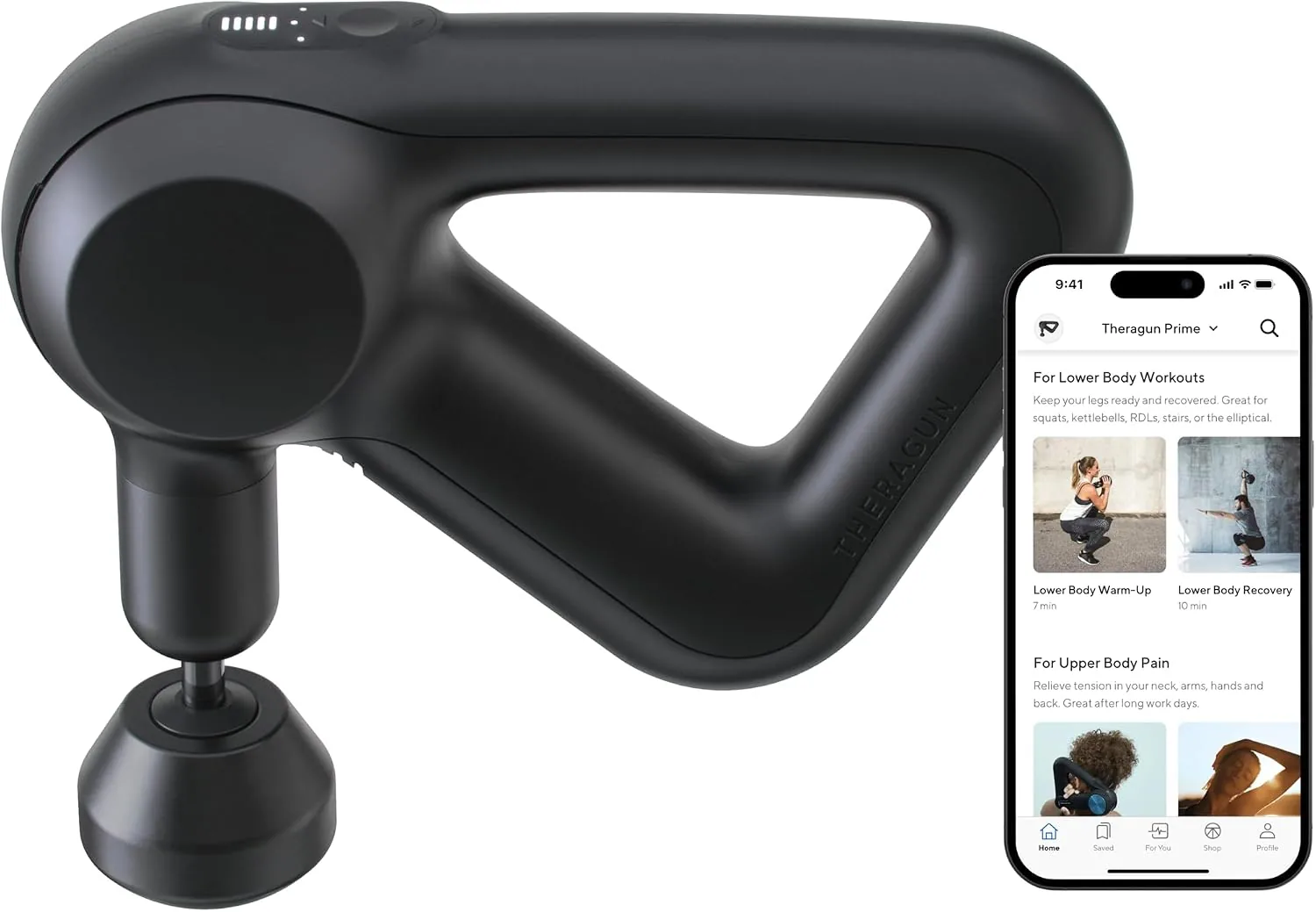
The honest verdict: most first-time buyers do not need a $319.99 Therabody Prime, excellent as it is. The sub-$40 tier answers the question "does percussion therapy work for me?" at minimal risk. If you already train four or five days a week, step up to the $100–$140 tier, where motors, amplitude, and build quality improve noticeably.
A simple first-time buyer checklist
- Set a budget: under $50 to try the category, $70–$140 if you are confident you will use it weekly.
- Confirm at least 3 speed settings and a brushless motor.
- Check amplitude — around 12mm suits beginners; 16mm is for deep-tissue veterans.
- Verify the box includes a ball, flat, and pinpoint head.
- Read recent reviews for noise and battery complaints, not just the star rating.
- Confirm the return window before checkout.
Pick the cheapest model that checks every box on that list. That is the whole decision — and your shoulders will thank you for making it.
Related Products
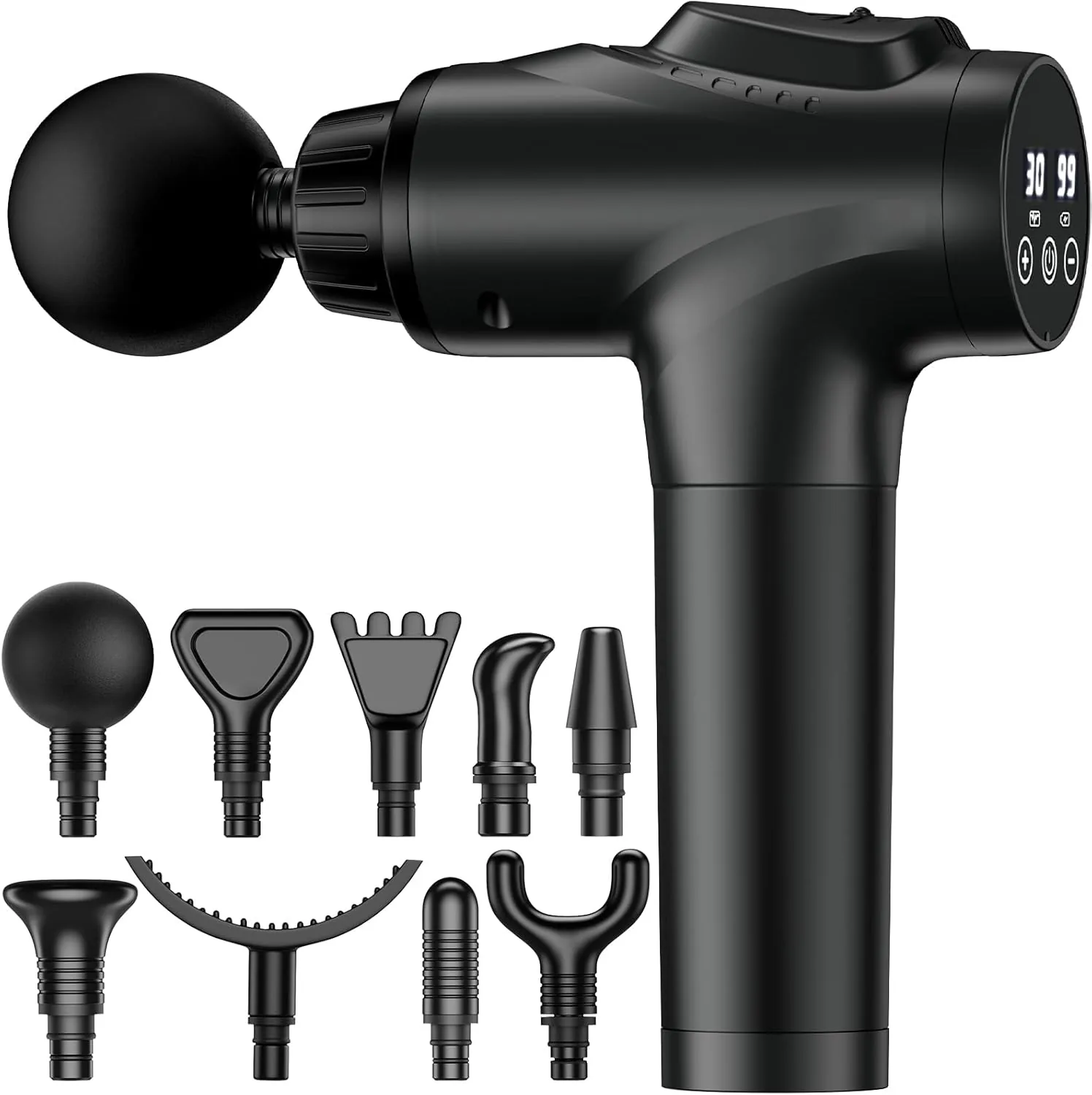 USD 19.49
APHERMA Massage Gun, Muscle Massage Gun for Athletes Handheld Electric Deep Tissue Back Massager, Percussion Massage Device for Pain Relief with 30 Speed Levels 9 Heads Black
Beat soreness, back pain, and stress: For those who don't want muscle soreness to slow th…
View Details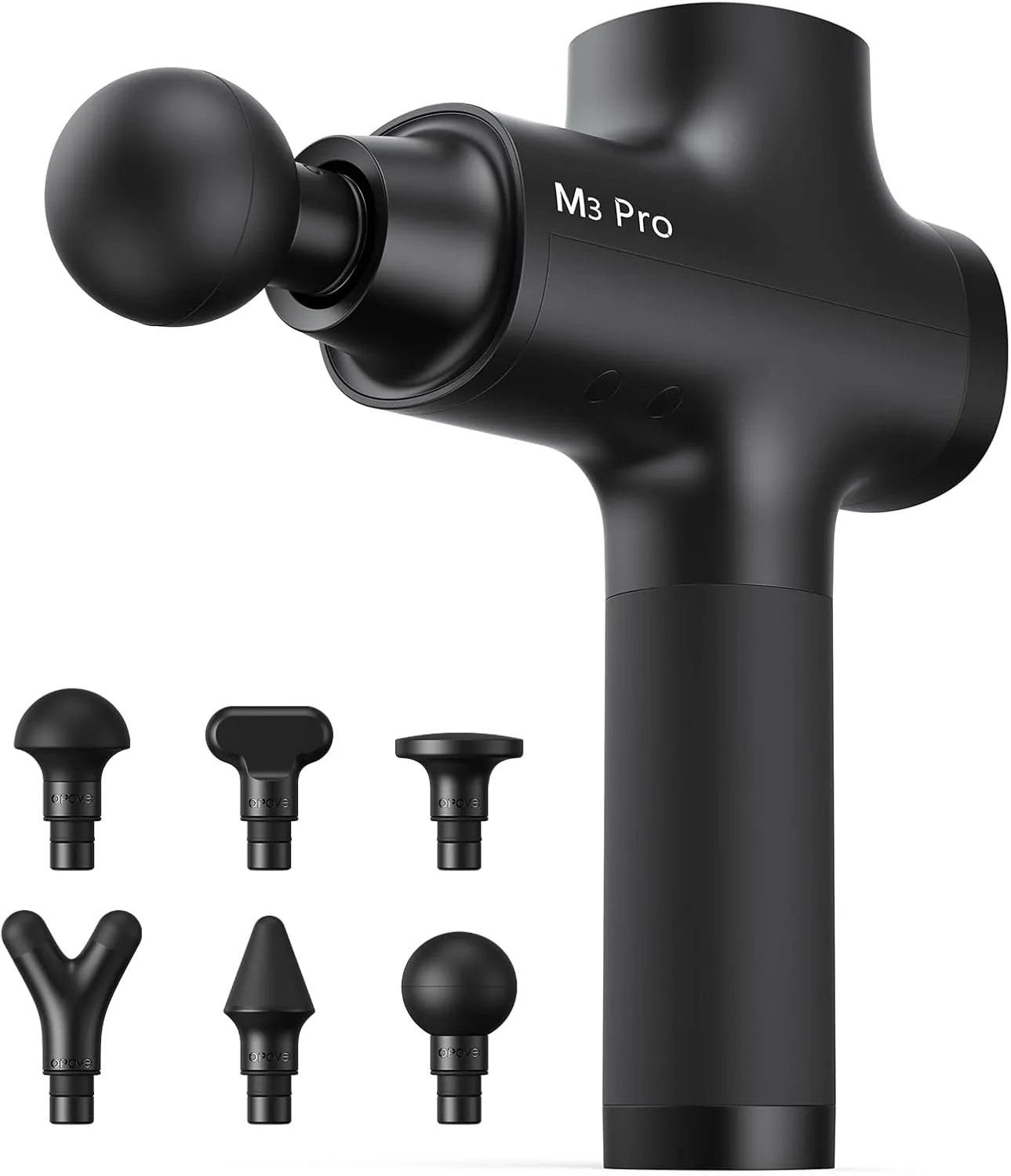 USD 97.49
Opove M3 Pro 2 Massage Gun Deep Tissue Percussion Muscle Massager for Workout, Handheld Percussive Therapy Fascia Gun for Athletes Fast Recovery 4-8 Hours Long Battery Life, Powerful, Quiet, Black
You Get What You Pay For - We work out daily and invest a lot of time and effort into our…
View Details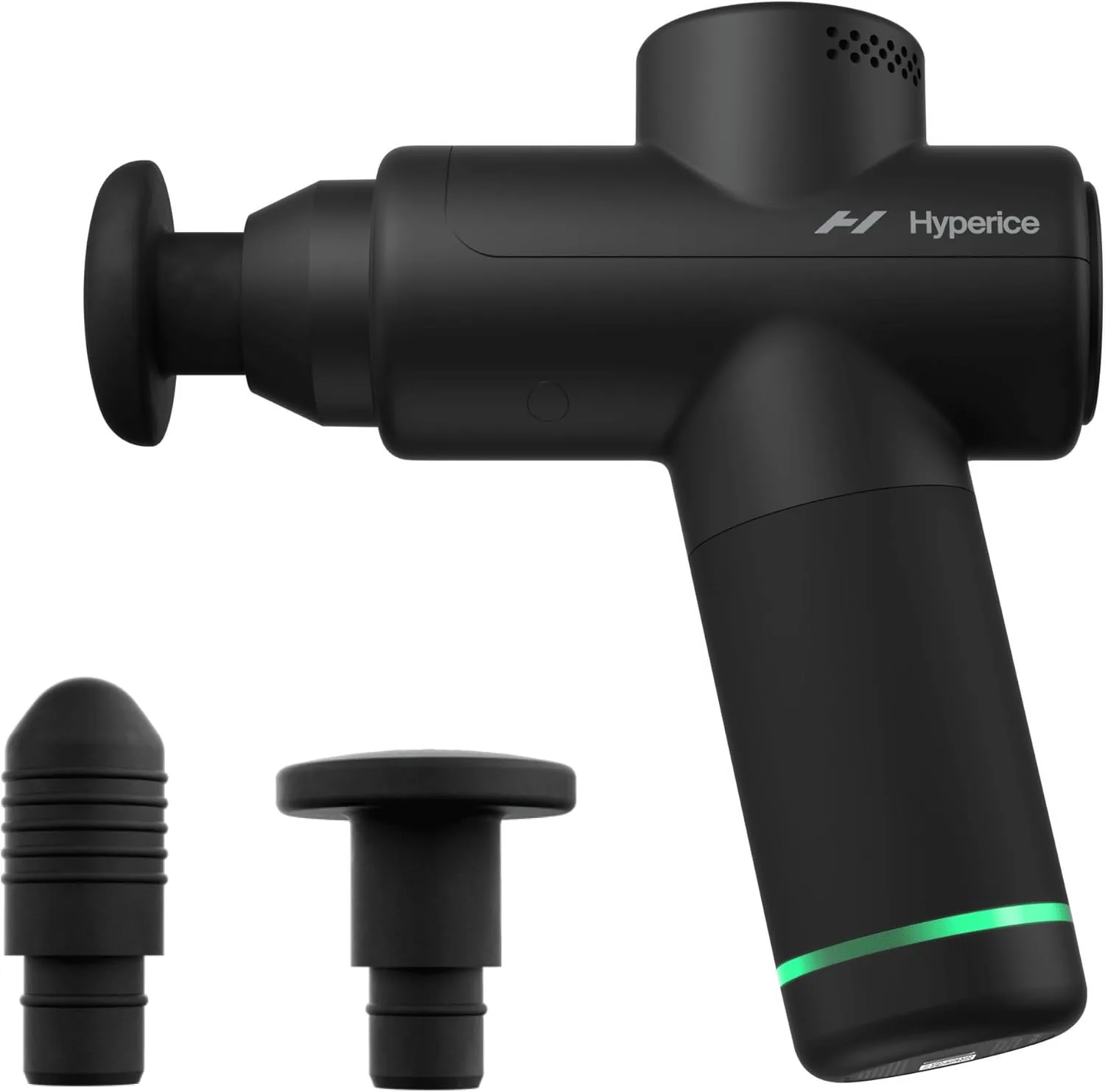 USD 104.25
Hyperice Hypervolt Go 2 - Black - Featuring Quiet Glide Technology - Handheld Percussion Massage Gun - 3 Speeds, 2 Interchangeable Heads - Helps Relieve Sore Muscles and Stiffness
On the go: Compact and lightweight, the Go 2 fits in your hand and in your bag. Press and…
View Details
USD 239.99
TheraGun Therabody Prime (4th Generation) - Deep Tissue Percussion Therapy Massage Gun - Bluetooth Enabled, Personal Massager for Pain Relief in Neck, Back, Leg, Shoulder and Body
Simplified Smart Percussive Massage Therapy: Prioritizes the essential massage gun featur…
View DetailsRelated Articles
- Desktop Charging Station Buying Guide for Heat-Conscious Buyers
- Desktop Charging Station Buying Guide for Minimalist Desk Setups
- Hyperice Hypervolt 2 Buying Guide for Everyday Quiet Muscle Recovery
- Massage Gun Buying Guide for Pre-Workout Muscle Activation
- Massage Gun Amplitude Buying Guide for Deep Muscle Reach
- Massage Gun Buying Guide for Couples and Shared Households